
How to Disinfect Floors, Drains, and Food-Contact Surfaces with Purgo
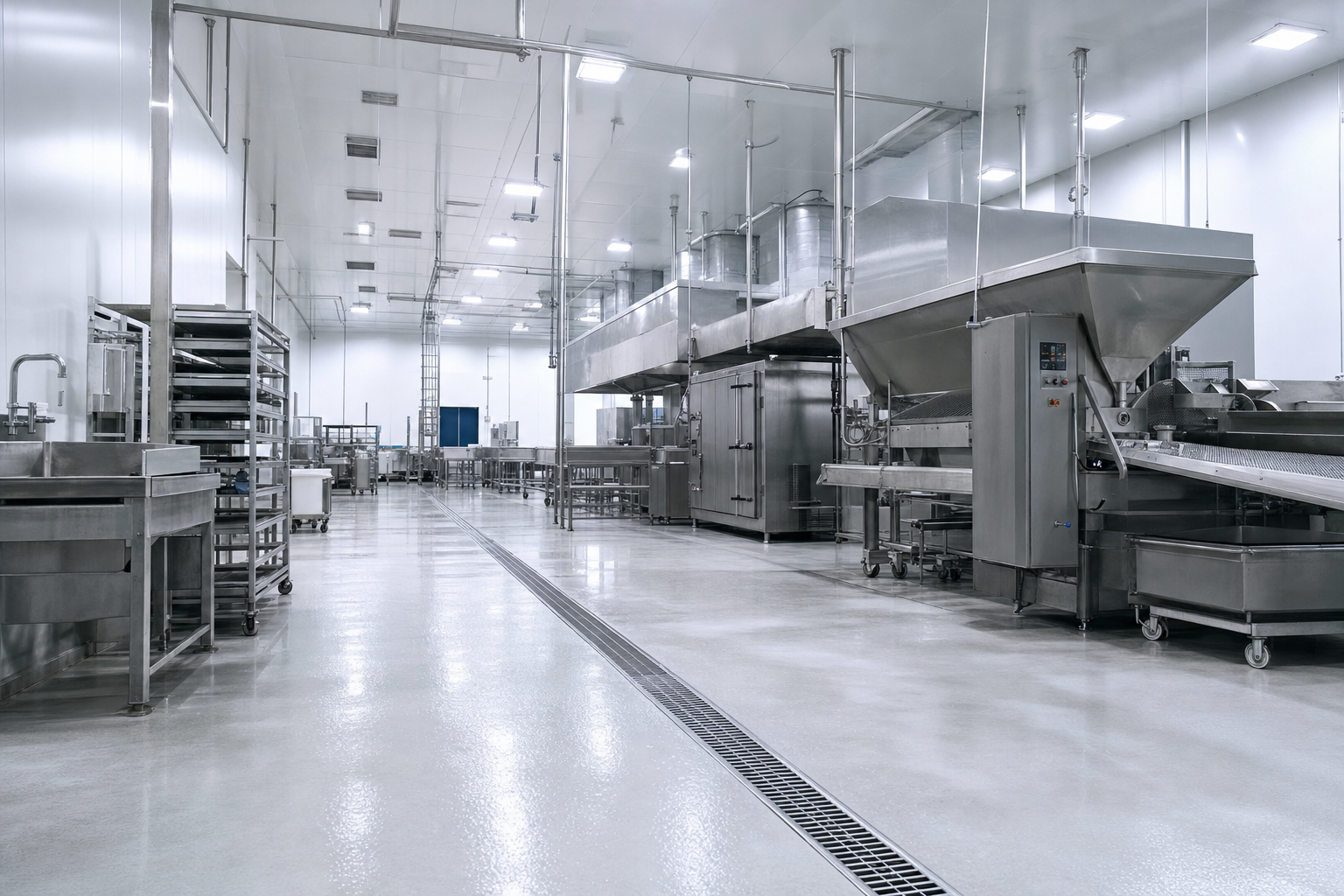
In a food processing plant, hygiene doesn’t end when visible dirt is gone. Floors, drains, and surfaces that may come into contact with food are part of a system where water, foot traffic, organic debris, and mobile equipment can carry contamination from one area to another. That is why a biodegradable food-grade disinfectant must be integrated into a clear sequence: remove debris, clean, rinse when necessary, disinfect, and verify. Purgo, by EMS Cleaning, is a biodegradable antimicrobial sanitizer for post-CIP use; this guide explains how to apply it to open surfaces after cleaning, without confusing disinfection with a washing or descaling step.
1. Why Floors, Drains, and Surfaces Require a Specific Plan
Open areas in a food processing facility do not accumulate the same amount of dirt or pose the same risks. A shipping floor can accumulate dust, moisture, and wheel marks; a preparation area may be subject to splashes; a drain trap collects water, particles, and organic matter; and a table or conveyor belt requires a much more controlled application. Treating everything the same way, without distinguishing the area’s use, can leave critical points unaddressed. This biodegradable food-grade disinfectant must be applied in accordance with the approved procedure.
Drains deserve special attention because they connect areas and collect wash water. It is not advisable to use a hose as the sole solution or to push debris toward a grate. First, remove solids and, when the design allows, disassemble any accessible parts of the drain. Next, clean the surface, remove the loosened dirt, and apply a biodegradable food-grade disinfectant following the validated procedure. This prevents the disinfection phase from becoming an attempt to compensate for incomplete cleaning.
2. Bleeding: What is its purpose after flushing?
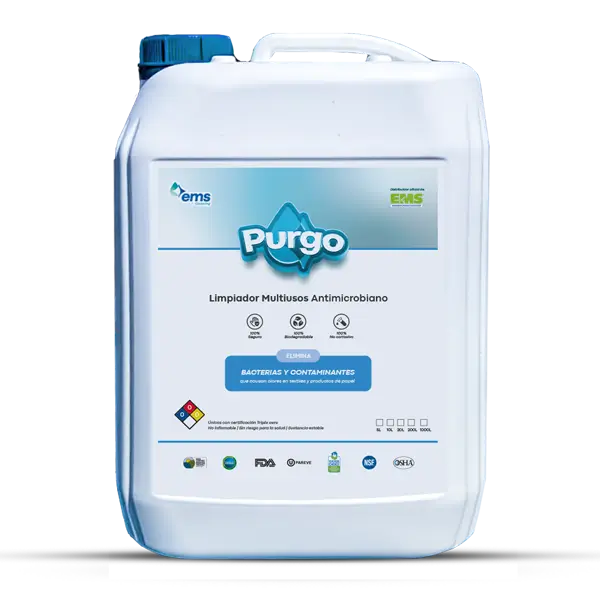
Purgo is used as a post-CIP sanitization or disinfection step. This means it is introduced into the process after removing dirt that could block contact with the surface. It would be incorrect to describe it as a detergent, alkaline CIP solution, or acidic descaler: those products address other issues and are selected based on the type of tank and equipment. The Purgo product page allows you to review product information before designing a test. This biodegradable food-grade disinfectant must be applied in accordance with the approved procedure.
The operational advantage of a biodegradable food-grade disinfectant lies in incorporating it into a reproducible routine without losing sight of the process limits. Effectiveness should not be assumed based solely on the product’s brand name: it depends on the surface being clean, the product being applied in accordance with technical recommendations, the specified contact time being observed, and the quality system verifying the results. In sensitive areas, this verification may combine visual inspection, operational records, and the controls specified in the HACCP plan.
For a general overview of the product and its approach to sustainability, see also the article on biodegradable disinfectants for the food industry featuring Purgo. Here, the goal is different: to translate that information into an application method for floors, drains, and open surfaces.
Would you like to evaluate Purgo as part of your food safety program?
EMS Cleaning can review the area, the surface, and the cleaning sequence before proposing a technical trial.
3. The correct order: clean first, then disinfect
Disinfection begins before opening the container. Cordon off the area, remove any exposed food, protect electrical equipment, and ensure that staff are familiar with the procedure. Next, remove any solid debris using utensils designated for that area. On the floor, this may include food scraps, dust, or plastic wrap; in a drain, debris trapped in the grate or strainer; and on a work surface, residue from the previous batch and auxiliary materials. This biodegradable food-grade disinfectant must be applied in accordance with the approved procedure.
The second step is cleaning. The appropriate detergent must remove grease, protein, sugars, biofilm, or any other dirt present. Use the mechanical action and rinsing required by the installation method. Once the surface is visually clean and free of buildup, apply Purgo according to technical recommendations. Do not mix the product with other chemicals or determine concentrations, temperatures, or contact times based on guesswork: the dilution must be adjusted to the system’s needs, and the contact time must be as specified in the technical documentation.
The third step is the completion of the process. If the application is on a food-contact surface, the person in charge must specify the rinsing procedure, if applicable, and the conditions for releasing the area. Document the product batch, area, date, operator, application method, incidents, and verification results. This record ensures that the use of a biodegradable food-grade disinfectant is a managed measure within the hygiene plan rather than an isolated action.
4. Procedure for Disinfecting Industrial Floors
Floors should be cleaned in sections, following a cleaning path that avoids moving from a high-traffic area to a high-hygiene area. Mark off the area to reduce slipping and foot traffic during the process. Remove solid waste before wetting the surface; this reduces the amount of material that can enter the drains. If there is foam, a greasy film, or stuck-on residue, complete the cleaning before proceeding with sanitization. This biodegradable food-grade disinfectant must be applied in accordance with the approved procedure.
After washing and rinsing as specified in the procedure, apply Purgo evenly, avoiding dry spots or unnecessary puddles. The choice between manual application, low-pressure equipment, or another system should be consistent with the aerosol assessment, nearby equipment, and technical recommendations. A biodegradable food-grade disinfectant works best as part of a consistent routine rather than as a one-time fix when an incident occurs.
Check corners, joints where the floor meets the wall, equipment legs, wheels, seams, and the perimeters of machines: these are areas that tend to experience less foot traffic and can trap moisture. When you’re finished, make sure the floor is free of cleaning residue, that the drain is receiving water properly, and that the area is safe to use again. Shift changes are an opportunity to verify that the method is always carried out the same way.
5. How to Clean Drains, Gutters, and Grates Without Spreading Dirt
A drain is not a secondary surface. Gutters collect water from various operations, and if cleaned without proper control, they can spray or carry dirt onto clean surfaces. Set aside dedicated or separate tools for drains, wear the PPE specified in the risk assessment, and keep them separate from utensils that come into contact with food. Never begin a cleaning route at the drain and continue to a table or a high-integrity area. This biodegradable food-grade disinfectant must be applied in accordance with the approved procedure.
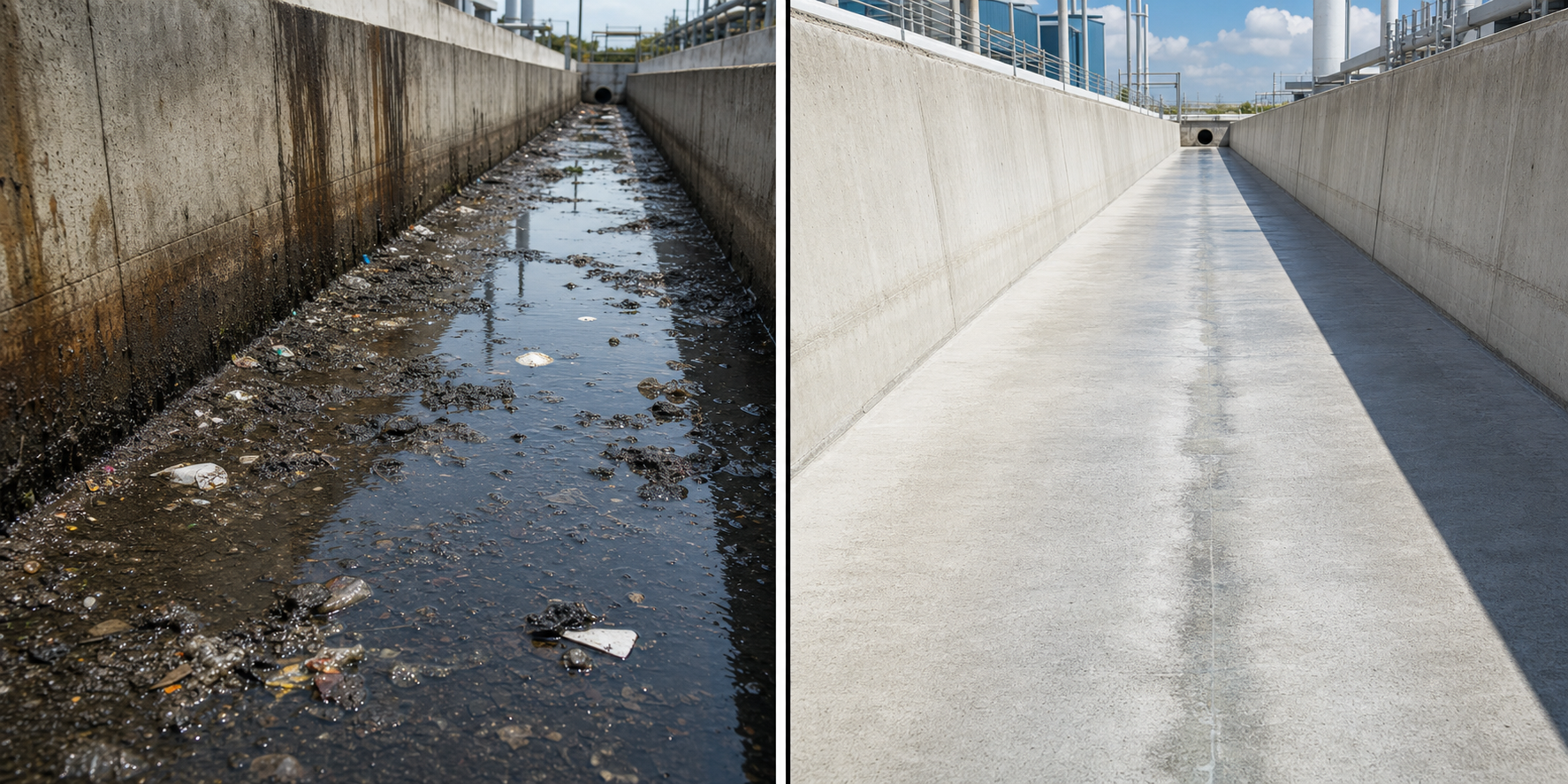
Remove the grate and any accessible debris in accordance with the equipment’s design. Clean the removable parts and visible walls of the channel with the appropriate detergent, paying close attention to joints and corners. Rinse or remove any remaining dirt according to internal procedures, and only then apply Purgo as a biodegradable food-grade disinfectant. The disinfectant must cover the entire cleaned surface, not just the center of the drain.
The frequency should be determined based on activity level, food type, traffic, humidity, and inspection results; there is no universal schedule that applies to all facilities. If you notice persistent odors, backflow of water, damage to grates, or recurring buildup, the problem may be related to design, maintenance, or previous cleaning and should be investigated—not simply masked with more disinfectant.
6. Food-contact surfaces: checks before clearing the area
Tables, utensils, open hoppers, conveyor belts, and other food-contact surfaces require a more rigorous approach than a floor. Before applying a biodegradable food-grade disinfectant, identify the material and confirm that the method is compatible with the surface, joints, conveyor belts, and nearby components. Protect or remove food and packaging materials; then perform a thorough cleaning before the disinfection phase. This biodegradable food-grade disinfectant must be applied in accordance with the approved procedure.
The application must follow Purgo’s technical recommendations and the procedure approved by the plant. Do not make up your own dilution, temperature, or contact time. After application, the quality manager must determine whether rinsing is necessary and identify the pre-production checks required. This is especially important when the surface comes into direct contact with ready-to-eat food or when the area is subject to stricter requirements.
Visual inspection remains useful: there should be no residue, foam, film, or apparent damage. However, visual inspection is not a substitute for the checks defined by the quality system. Depending on the risk and the internal plan, inspections, swabs, ATP testing, or other verification methods may be used. The criteria must be consistent, documented, and allow for the investigation of any deviation before the line is released.
7. Comparison: Flushing vs. Conventional Disinfectants
The following comparison is intended to guide technical decision-making; it does not replace safety data sheets, instructions for use, or facility validation. Products based on hypochlorite or ammonium can vary significantly depending on their formulation. Always review the specific documentation for the product you are comparing. This biodegradable food-grade disinfectant must be applied in accordance with the approved procedure.
| Criterion | Purgo | Conventional hypochlorite or ammonium hypochlorite |
|---|---|---|
| Role in the process | Biodegradable antimicrobial sanitizer for use after CIP, following cleaning | It depends on the formulation and the existing procedure |
| Environmental Approach | Proposal for a Biodegradable Disinfectant for the Food Industry | This should be checked on each product's page |
| Use on visible dirt | It does not replace waste removal or cleaning | Nor should it replace a previously validated cleaning procedure |
| Dilution and Contact | Based on technical recommendations and system requirements | According to the label and technical specifications for the specific product |
| Chemical Mixtures | Do not mix with other products | Do not mix; check for specific incompatibilities |
| Decision on Use | Validate by area, risk, and verification method | Validate by formulation, surface, risk, and verification method |
The issue is not simply deciding that one product family is suitable for all scenarios. The right decision involves comparing cleaning performance, material compatibility, equipment operation, safety, and documentation requirements. For a biodegradable disinfectant used in the food industry, the opportunity lies in reducing unnecessary dependencies without compromising hygiene control.
8. How to Incorporate It into the HACCP System and Documentation
Document the area, the risk, the application method, the frequency, and the verification. Keep the technical documentation up to date and validate the change within the HACCP plan before implementing it.
Do you need a quote for flooring, drainage, or contact surfaces?
Contact EMS Cleaning to schedule a Purgo test with application and verification criteria tailored to your facility.
10. Frequently Asked Questions About Purge in the Food Industry
Does "Purgo" work for cleaning grease or food residue?
It should not replace the cleaning step. Purgo is a biodegradable, post-CIP antimicrobial sanitizer and is applied after removing residues and cleaning the surface. Select the cleaning detergent based on the type of dirt and apply Purgo according to the technical recommendations. This biodegradable food-grade disinfectant is validated with each application.
Can Purgo be used in drains?
It may be used for the disinfection of drains and gutters after removing debris and cleaning accessible parts. Determine the designated tools, application method, and frequency based on the risk analysis and plant procedures. The food-grade biodegradable disinfectant is validated with each application.
What dilution, temperature, or contact time is required?
The dilution ratio must be adjusted according to the system's requirements, and the contact time must follow current technical recommendations. Generic values should not be applied: the surface, the level of pre-existing contamination, the method, and internal requirements must be validated. The biodegradable food-grade disinfectant is validated for each application.
Is Purgo suitable for food-contact surfaces?
Use on a contact surface must be defined and validated within each plant’s hygiene system. Verify the intended application against the technical documentation, establish a rinse procedure if applicable, and release the area only after the quality controls have been verified. The biodegradable food-grade disinfectant must follow the validated process.
Can it replace any hypochlorite or ammonium-based disinfectant?
There is no automatic substitution. Compare the formulation, surface, risk, compatibility, application method, and verification. EMS Cleaning can help design a test to determine whether Purgo is suitable for the specific procedure. Biodegradable disinfectants used in the food industry must follow a validated process.
11. Conclusion: Verifiable disinfection starts with the method
Start with a representative area, define acceptance criteria, and evaluate the process with the quality manager to establish a repeatable and documented routine using a biodegradable disinfectant approved for the food industry.