
How to Clean Industrial Heat Exchangers Without Using Hazardous Chemicals
In refineries, chemical plants, dairy and pharmaceutical facilities, and HVAC systems, the heat exchanger is the silent heart of the process. When it becomes fouled—with fats, biofilms, proteins, oxides, or limestone—thermal efficiency drops, differential pressure skyrockets, and energy consumption spirals out of control. The traditional solution has always been 30–50% caustic soda, inhibited HCl, or nitric acid—all of which pose personal, environmental, and logistical risks. The good news is that much of the cleaning required for industrial heat exchangers can now be handled with a biodegradable, non-toxic alkaline degreaser with a Triple Zero HMIS rating: SynClean HD from EMS Cleaning. This 2026 guide explains when it works, when it doesn’t, and how to integrate it into a realistic CIP process.
Types of Heat Exchangers and Their Functions
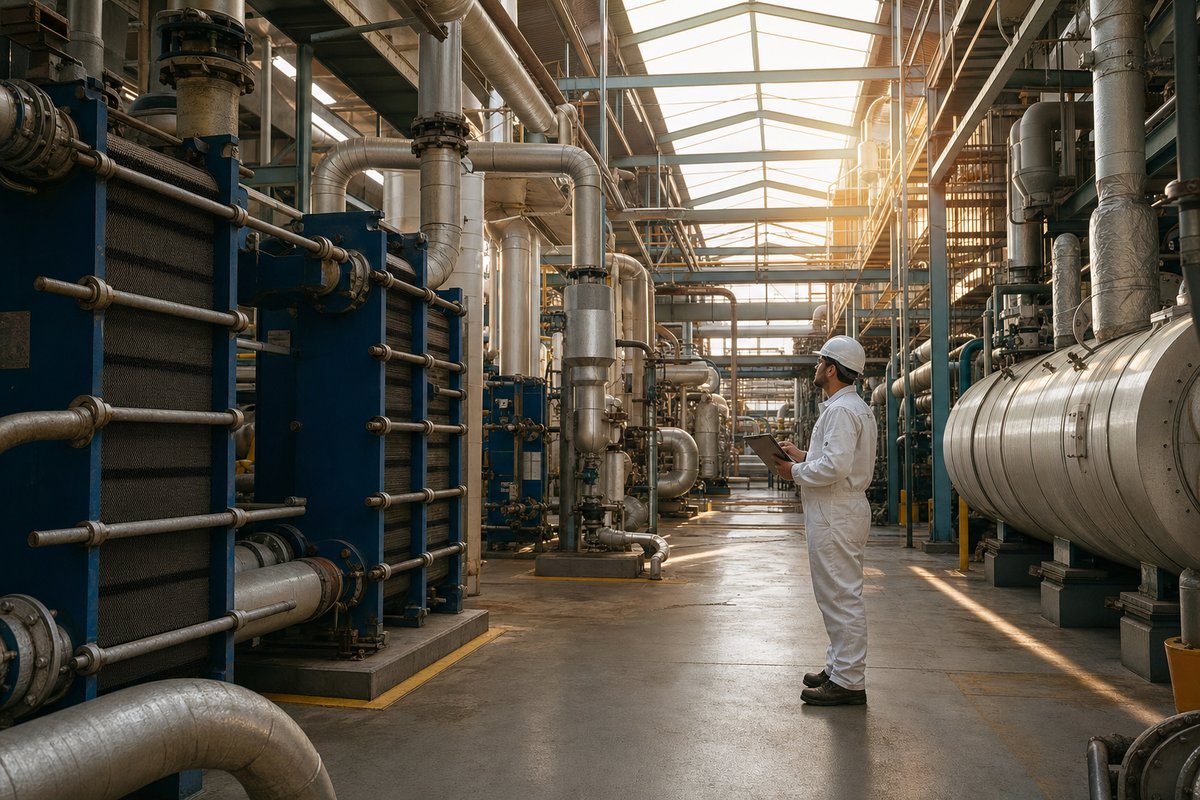
There are three major families in the European industry, and each imposes different restrictions on chemists.
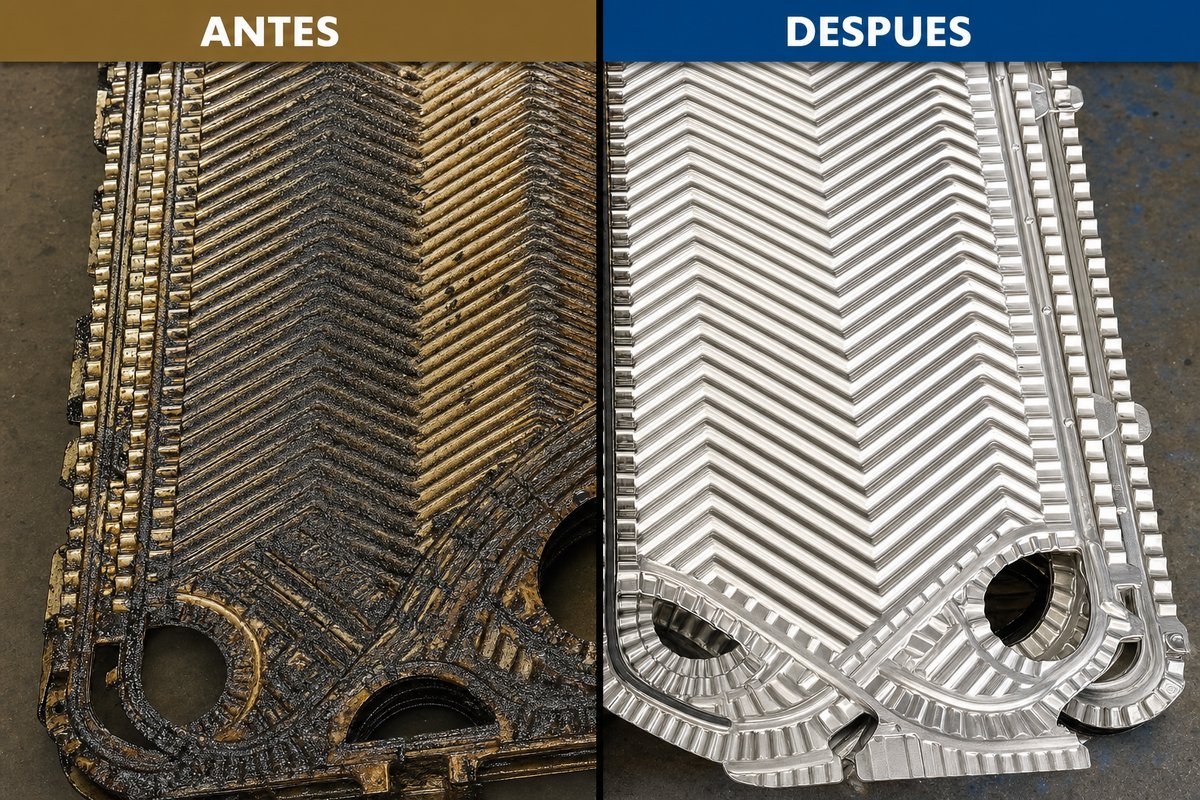
Plate heat exchangers (PHE). The most common types in the food, dairy, pharmaceutical, brewing, and HVAC industries. A stack of AISI 316 or titanium plates, separated by EPDM, NBR, or Viton gaskets, channels two fluids in countercurrent flow. The narrow channels (2–6 mm) cause any deposits to reduce the U-coefficient and increase the pressure drop. They are preferably cleaned using CIP in a closed circuit.
Shell-and-tube heat exchangers. Widely used in refineries, petrochemical plants, and power generation. A bundle of tubes—made of AISI 316, Hastelloy, cupronickel, or titanium—circulates inside a shell. They handle high pressures and temperatures and accumulate scale on the shell and inside the tubes. Cleaning combines chemical CIP with hydroblasting.
Spiral heat exchangers. Used with fluids containing solids, slurries, and viscous effluents. Their self-cleaning design reduces fouling, but when fouling does occur, it requires chemicals capable of dissolving complex organic matter without damaging the gaskets.
They all share the same enemy: fouling. The goal of cleaning industrial heat exchangers is to restore the design U-factor and, with it, energy efficiency.
Common Deposits and Their Origins
Fouling in a heat exchanger typically consists of a layered deposit containing five types of contaminants.
- Fats and oils. Thermal oils, compressor lubricants, light hydrocarbons, and animal or vegetable fats. They form hydrophobic films that insulate the metal wall.
- Coagulated proteins. Common in dairy and juice pasteurizers: casein, serum proteins, and albumins, which denature at temperatures above 65 °C and adhere to AISI 316.
- Biofilms. Pseudomonas, Legionella, or Bacillus, protected by a matrix of extracellular polysaccharides. They occur in cooling water systems and condensers.
- Limestone (CaCO₃) and mineral salts. Calcium carbonate, calcium sulfate, and magnesium phosphate, commonly found in hard water systems. This deposit does not dissolve in alkaline solutions; it requires an acidic environment.
- Ferric oxides and sulfates. Rust, magnetite, and corrosion deposits upstream. Require acidic descaling agents.
A true ion exchange resin typically consists of an outer organic layer and an inner mineral layer. That is why an effective CIP process always consists of an alkaline phase followed by an acidic phase.
Traditional Methods and Their Risks
Four major chemical companies dominate the traditional maintenance market, all of which have hidden costs.
Inhibited hydrochloric acid (10–15%). It rapidly removes carbonates and certain oxides. It is a Category 1B corrosive according to CLP, releases aggressive vapors, attacks EPDM gaskets, and, in the presence of free chlorides, causes pitting and stress corrosion cracking (SCC) in titanium and AISI 316 plates. It requires full PPE and must be neutralized prior to disposal.
Caustic soda (NaOH) at 30–50%. A long-standing standard for saponifying fats and hydrolyzing proteins. Category 1A corrosive: a splash in the eyes can cause blindness in seconds. When heated and in the presence of chlorides, it promotes SCC in AISI 316 and generates wastewater with a pH of 12–13, which requires mandatory neutralization.
Nitric acid (2–5%) and citric acid. Nitric acid is very effective against milkstone and calcium salts, but it is an oxidizing agent, requires ADR storage, and produces NOx. Citric acid is biodegradable, but its effectiveness against heavy fouling is limited, and it has a high cost per kilogram.
In addition to personal risks, there is a growing cost: storing Class 8 ADR products, corrosive PPE, training, effluent neutralization, REACH, and ATEX all contribute to making every liter of caustic soda or HCl a real cost that far exceeds its purchase price.
SynClean HD: The Biodegradable Alkaline Alternative
SynClean HD is a multifunctional cleaner and degreaser from EMS Cleaning formulated as an alkaline degreaser that is butyl-free, free of hazardous solvents, non-toxic, non-corrosive, and non-flammable. Its role in cleaning industrial heat exchangers is clear: to handle the alkaline phase of the CIP process—the phase that dissolves fats, oils, proteins, and biofilms—without resorting to concentrated NaOH. SynClean HD is a true alternative to caustic soda for the vast majority of industrial applications.

Key Technical Specifications:
- Composition. An alkaline degreaser free of butyl compounds and hazardous solvents; non-emulsifying (useful for grease traps, as it does not break down hydrocarbons and facilitates their separation downstream).
- Safety Profile. Non-toxic, non-corrosive, non-flammable. HMIS Triple Zero.
- Application compatibility: Cold or hot water, steam, rotating machinery, and CIP systems.
- Materials: Stainless steel, glass, and industrial surfaces.
- Dirt. Animal and vegetable fats, oils, proteins, and biofilms.
- Certifications: MIL-PRF-85570 Type 2, NSN 7930-01-100-3730, NSF A1, A4, A5, A8, C1, and K1, Digesa 2019.
- Applications: Food processing plants, commercial kitchens, hotels, transportation, chemical and petrochemical plants.
It is important to be clear about its scope: SynClean HD is the alkaline phase of the heat exchanger CIP, not a universal mineral descaler. It removes the organic load (fats, oils, proteins, biofilms) that constitutes the first layer of fouling. For the mineral layer (lime scale, oxides, sulfates), a specific acid phase is still required; to replace inhibited HCl, EMS Cleaning offers WaterSafe60, a biodegradable plate-type heat exchanger descaler. The combination of both products enables a complete CIP cycle without caustic soda or HCl.
Comparison of SynClean HD vs. Caustic Soda and Citric Acid
This table compares the three most commonly discussed chemicals used in the alkaline phase of an ion exchanger's CIP cycle.
| Criterion | 30% NaOH | SynClean HD | Citric acid |
|---|---|---|---|
| HMIS Profile | Health 3, Corrosive 1A | Triple Zero HMIS | Health 1-2, irritating |
| Corrosion on AISI 316 | SCC with chlorides and heat | Non-corrosive | Low, acceptable when cold |
| Operating temperature | 70–85 °C | Cold, Hot, and Steam | 40–60 °C |
| Compatibility with Titanium | Acceptable, watch out for SCC | Compatible | Compatible |
| Biodegradability | Mandatory neutralization | Biodegradable, non-toxic | Biodegradable |
| ADR / Storage | ADR Class 8 | No ADR | No ADR |
| Required PPE | Complete anti-corrosion protection | Basic | Glasses and gloves |
| Post-CIP Residues | pH 12–13, neutralize | Easy to clarify | Standard rinse |
SynClean HD is not as effective as NaOH at saponifying hardened fats at 85 °C, but it reliably handles the vast majority of situations where the organic load does not require that level of aggressiveness, thereby avoiding the hidden costs—PPE, ADR, neutralization, SCC—associated with concentrated caustic soda.
Step-by-Step CIP Procedure for a Plate Heat Exchanger
A well-designed CIP cleaning cycle for a heat exchanger combines alkaline and acid phases in sequence.
- Pre-rinse. Water at 40 °C for 10 minutes to remove residues and solids. Reverse the direction of the process whenever the equipment allows.
- Alkaline phase with SynClean HD. Dilution based on soil load; recirculation at 60–70 °C for 30–45 minutes. Objective: to dissolve fats, oils, proteins, and biofilms. Flow rate sufficient to ensure turbulent flow (Re > 4,000).
- Intermediate rinse. Water at 40–50 °C until the conductivity stabilizes and the pH of the return water is neutral.
- Acid Phase (if mineral scaling is present). If the diagnosis indicates limestone, ferric oxides, or sulfates, a specific acid phase is performed. WaterSafe60, which is biodegradable and non-corrosive, is recommended as a replacement for inhibited HCl. Recirculate at 40–50 °C until the pH of the acid is restored.
- Final rinse. Drinking water until neutrality is reached, verified by pH and conductivity.
- Final sanitization. In food or pharmaceutical heat exchangers, using a compatible product or thermal disinfection with water at 85–90 °C for 15 minutes.
Replacing NaOH with SynClean HD in step 2 eliminates the chemical hazard to the operator and avoids the need to neutralize the alkaline effluent.
Application Examples
Three profiles illustrate common scenarios in the Iberian market.
A petrochemical plant in the Tarragona complex equipped with plate heat exchangers for cooling solvents. The circuit accumulates light hydrocarbons, thermal oils, and biofilms from the cooling tower. The alkaline phase was traditionally treated with 3% NaOH at 80 °C, which posed issues such as corrosive process water, the need for effluent neutralization, and the risk of SCC in titanium plates. SynClean HD is proposed as a replacement for the alkaline phase.
A specialty chemicals plant in the Valencian Community equipped with tubular heat exchangers. Heated with thermal oil and featuring a water side with high hardness. Mixed fouling: organic residues from microleaks and scale deposits. A two-phase CIP—alkaline SynClean HD followed by acidic WaterSafe60—addresses both layers using biodegradable chemicals.
A dairy plant in northern Spain equipped with plate pasteurizers. The CIP system requires a 1–3% caustic soda solution at 75–85 °C to hydrolyze casein and saponify butterfat. SynClean HD is used in auxiliary heat exchangers, condensers, and air coolers, where hardened protein deposits are not the primary challenge.
Material and Regulatory Compliance
A chemical used for the maintenance of industrial heat exchangers must be compatible with the equipment's engineering specifications and with European regulatory standards.
Metallic materials. Compatible with AISI 304, AISI 316, titanium, Hastelloy, and cupronickel. Because it is non-corrosive, it eliminates the risk of SCC typically associated with hot NaOH containing chlorides.
Gaskets and elastomers. Compatible with EPDM, NBR, and Viton, provided the manufacturer's maximum temperature limit is observed. The absence of butyls and hazardous solvents reduces the swelling typically caused by organic solvents.
ATEX. Because it is non-flammable, it can be used in ATEX-classified areas without the restrictions that apply to flammable products.
Food contact and traceability. NSF A1, A4, A5, A8, C1, and K1 certifications attest to suitability for food-processing facilities. MIL-PRF-85570 Type 2 and NSN 7930-01-100-3730 enhance traceability, including in the aerospace industry.
REACH and logistics. It does not require ADR compliance for road transport within the EU, which simplifies logistics and storage. The absence of mandatory neutralization and its biodegradability facilitate environmental compliance.
Frequently Asked Questions
Does SynClean HD remove limescale from a heat exchanger?
No. SynClean HD is an alkaline degreaser: it breaks down fats, oils, proteins, and biofilms, but not calcium carbonate or sulfates. Limescale and mineral deposits require a specific acidic phase. As a replacement for inhibited HCl, EMS Cleaning recommends WaterSafe60. A complete CIP cycle combines both phases: SynClean HD for organic contamination and WaterSafe60 for mineral deposits.
Is it compatible with titanium plates and special alloys?
Yes. Because it is non-corrosive and does not contain aggressive free chlorides, it is compatible with titanium, Hastelloy, and AISI 316 plates, and eliminates the risk of SCC in welds that is typical of hot caustic soda. Always verify the compatibility of gaskets using the manufacturer’s data sheet.
What is the recommended dilution for a heat exchanger CIP?
It depends on the degree of soiling, the temperature, and the geometry. As a general guideline for plates with moderate organic contamination, recirculation at 60–70 °C for 30–45 minutes is recommended, adjusting the dilution according to specific technical recommendations. EMS Cleaning offers guidance for each application.
Does it completely replace NaOH?
It depends on the application. In heat exchangers with typical organic fouling—process cooling, HVAC, specialty chemicals—SynClean HD handles the alkaline phase without caustic soda. In extreme applications such as dairy pasteurizers with casein that has hardened at 85 °C, caustic soda remains irreplaceable in the core of the internal CIP process. It is an alternative to caustic soda in most industrial scenarios, not a universal substitute.
Does it leave behind residues that affect heat transfer?
No. SynClean HD rinses off with water without leaving a significant residual film, provided that rinsing is continued until the conductivity in the return line stabilizes. Unlike cationic surfactants or products containing silicones, it does not form a residual layer that alters the U-coefficient of the heat exchanger.
Conclusion and Call to Action
Cleaning industrial heat exchangers is no longer limited to the NaOH + HCl combination. Today, there is a biodegradable solution with a Triple Zero HMIS rating to handle the alkaline phase of CIP without compromising results and without incurring the hidden costs of an ADR Class 8 product. SynClean HD fills this need: a broad-spectrum alkaline degreaser, NSF-certified and MIL-PRF-85570 Type 2-compliant, suitable for stainless steel, titanium, and industrial surfaces. For the acid phase, WaterSafe60 completes the CIP process without the use of HCl.
If you operate plate, tube, or spiral heat exchangers in refineries, the chemical industry, HVAC, the pharmaceutical industry, or the food industry, now is the time to review the alkaline phase of your CIP process and calculate the actual cost of your current system compared to a biodegradable alternative.
Request your free sample of SynClean HD now
Our technical team analyzes the fouling in your heat exchangers and proposes a customized CIP protocol, with no obligation.
For more technical information, please refer to the official SynClean HD data sheet, the WaterSafe60 data sheet for the acid phase, or contact our technical team.
EMS Cleaning Spain — Kefi Bosque Group S.L.
Av. Jaume Recoder 88, 8th Floor, Suite 4, 08301 Mataró (Barcelona)
Tel.: +34 634 293 241 · info@emscleaning.eu · sales@emscleaning.eu
Official distributor of EMS Cleaning for Spain and Portugal.