
Whether at a precast plant, a construction site, or a mortar shop, molds and tools get dirty every day. Mortar that isn’t removed in time hardens into a crust in the corners of the mold, on the edges of trowels, on the paddles of portable mixers, and at the joints of metal formwork. This crust distorts subsequent pieces, worsens the finish of the exposed surface, and requires chiseling or the use of a cutting disc—with the risk of scratching the steel.
The standard solution has been diluted hydrochloric acid (sulfuric or muriatic acid). It dissolves concrete, but it also produces fumes, corrodes metal, and requires the rinse water to be neutralized. That is why many production managers are looking for another way to clean concrete molds without relying on hydrochloric acid.
In this guide, we explain the intended use of Barracuda 10K, the EMS descaler for hardened concrete, cement, and mortar; how to organize the cleaning of molds and tools using it; what to check before applying it; and what limits must be observed.
1. Why Does Concrete Build Up in Molds and Tools?
Fresh concrete does not remain in the formwork due to carelessness, but rather because of the way the work is done:
- Splatter and burrs on edges, joints, and side panels during pouring and vibrating.
- Grout in corners and crevices where the formwork removal does not remove all the material.
- Successive layers: Each cycle leaves a thin film that, if not wiped away, hardens on top of the previous one.
- Tools left behind at the end of the shift: trowels, shovels, putty knives, buckets, and mixers with hardened cement.
- Efflorescence and white calcium stains on surfaces that repeatedly get wet and dry.
As long as the layer is thin, water and a brush are sufficient. Once it has hardened, aggressive mechanical cleaning wears down the mold, and conventional acid poses safety and corrosion risks. That’s when it makes sense to consider a descaler formulated specifically for this task.
2. What is Barracuda 10K and what is it used for?
According to the product page for Barracuda 10K and its technical data sheet, Barracuda 10K is a concentrated, biodegradable industrial descaler formulated without hydrochloric acid. Its primary use is to remove hardened concrete, cement, and mortar from concrete mixers, molds, and tools. The documentation also mentions calcium scale, efflorescence, and rust stains in specific applications.
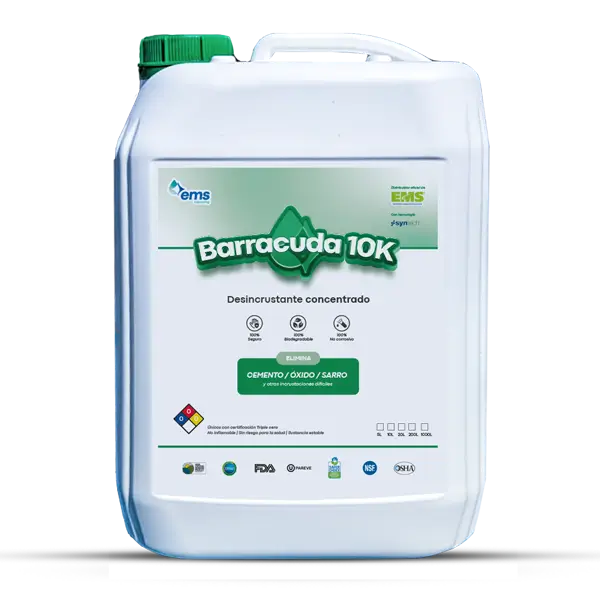
Key points from the Barracuda 10K documentation:
- Dilute according to the degree of soiling, using the dilution chart for each type of case provided in the technical data sheet.
- Apply by spraying or immersion, with a short processing time, followed by a final rinse with water.
- Gentle mechanical support when needed: a sponge, brush, or spatula.
- Used in the ultrasonic machines listed in the product sheet; suitable for small parts and tools.
- A biodegradable formula with no strong odor, according to the manufacturer.
There are also important warnings. The documentation states that certain low-quality chrome-plated and stainless steel parts may darken, and that compatibility with unknown alloys, coatings, or delicate materials should not be assumed. In addition, the product sheet recommends removing aluminum, copper, or tin-coated parts from undiluted product after 15 minutes, and states that the product should not be used on electrical equipment.
3. Procedure for Cleaning Concrete Molds with Barracuda 10K
The following outline is intended to help you prepare an in-house procedure. The final concentration, contact time, and rinse should always be determined by the current label and technical data sheet.
Step 1. Remove the mold from the line and trim off the excess
Set the mold or tool aside in a washing area with a drainage system. Use a plastic or wooden spatula to scrape off any loose pieces of concrete. The thinner the layer, the less product and time are needed.
Step 2. Identify the material and perform a spot test
Molds can be made of carbon steel, galvanized steel, aluminum, phenolic wood, plastic, or resins. Note the material and any surface treatment. Apply Barracuda 10K to a small, inconspicuous area, rinse it off, and check the results before treating the entire part. Pay special attention to chrome-plated parts, low-quality stainless steel, and parts with welds or coatings.
Step 3. Choose the working dilution
The technical data sheet recommends different dilutions for moderate, heavy, severe, or extreme cases. Start with the mildest dilution that makes sense given the thickness of the buildup, and increase it only if testing warrants it. Usage depends on the surface area and the thickness of the buildup, not on the number of molds, so it’s a good idea to keep track of how much you use during the first few cleanings.
Step 4. Apply the product and keep the surface damp
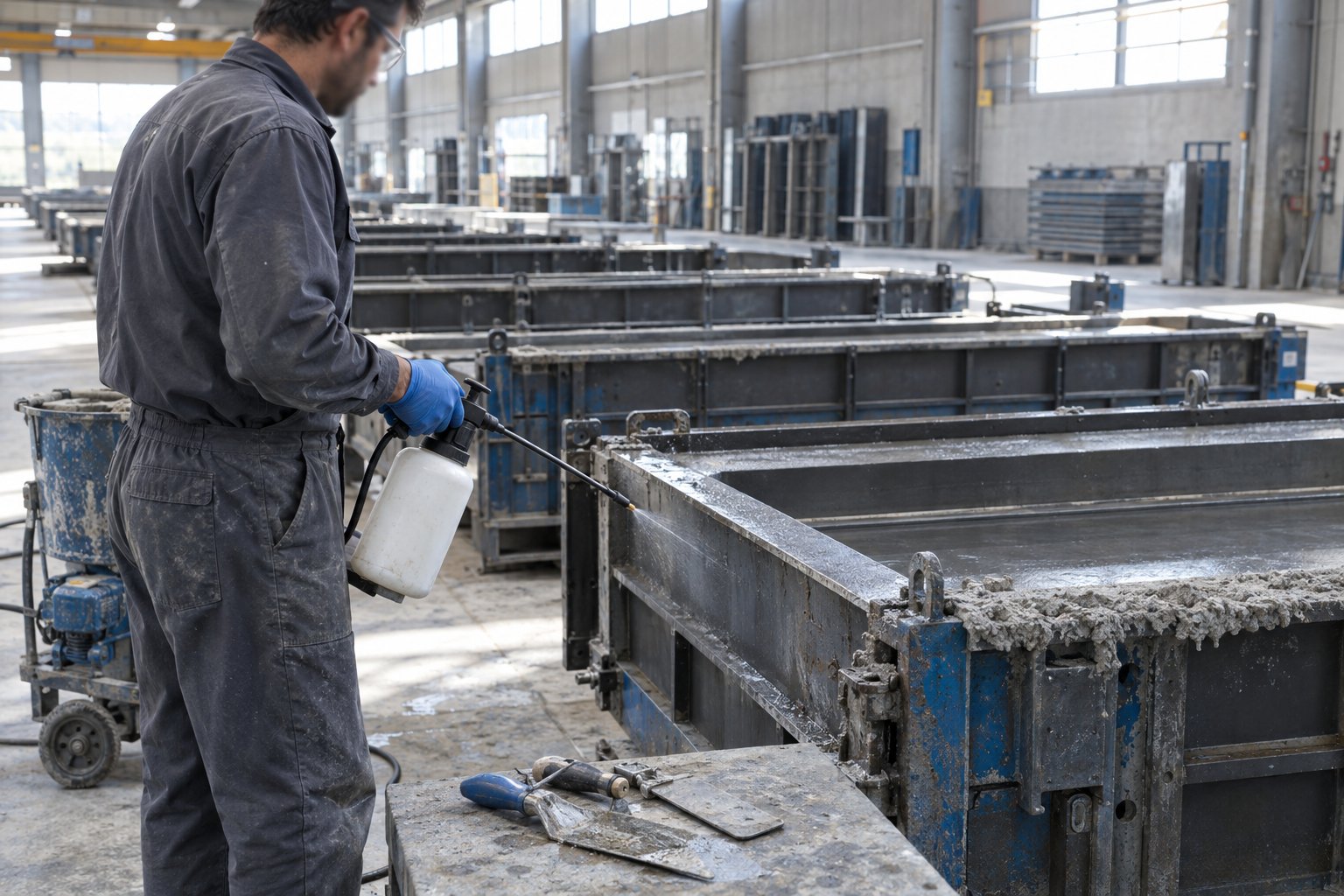
Spray the solution onto the areas of hardened concrete, especially corners, joints, and edges. Allow it to act for the time indicated on the product label, and do not let the solution dry on the formwork. Small tools (trowels, scoops, spatulas, mixer rods) can be treated by immersing them in a suitable container.
Step 5. Remove, rinse, and inspect
Use a brush or a non-metallic spatula to remove the softened material. Rinse thoroughly with water, check the corners, and repeat only in the areas that need it. Before reusing the mold, make sure it is clean and dry, and apply the release agent you normally use in your process.
Do you have molds or tools with hardened concrete in them?
Please provide us with the mold material, the approximate thickness of the crust, and a photograph so we can prepare a spot test using Barracuda 10K.
4. Comparison Chart of Cleaning Methods
The choice depends on the type of formwork, the thickness of the concrete, and the conditions in the washing area. This table summarizes the main differences in qualitative terms.
| Criterion | Mechanical cleaning (chipping, disc, metal scraper) | Diluted hydrochloric acid | Barracuda 10K |
|---|---|---|---|
| Effect on hardened concrete | Forcefully peel off the scab | Dissolves cement through an acid reaction | Softens hardened concrete, cement, and mortar so they can be removed by rinsing and gentle scrubbing |
| Risk to the mold surface | Scratches, loss of flatness, and edge wear | Corrosion of Steel and Damage to Welds and Galvanized Surfaces | May leave residue on compatible materials; may cause discoloration of certain low-quality chrome and stainless steel surfaces |
| Vapors in the work area | Dust and Noise | Irritating vapors that require ventilation and protection | The documentation states that there are no toxic vapors; follow the safety precautions listed in the safety data sheet |
| Corners and joints | Difficult to access without damaging the mold | It gets there, but the acid may be retained | Apply by spraying or immersion; rinse the retention areas thoroughly |
| Small Tools | Slow and likely to cause deformation | Immersion with a high risk of corrosion | Immersion or ultrasound, as specified in the technical data sheet |
| Washing water | Solids and powder | Must be neutralized before disposal | Biodegradable product; dispose of water in accordance with local regulations |
| When Does It Make Sense? | Coarse, loose debris, as a preliminary step | Cases that have already been validated under strict security measures | Periodic cleaning of molds and tools when replacing the acid |
In practice, the three methods are combined: first, the excess is removed by drying; then, the descaler is applied; and finally, the area is rinsed. The difference is that the chemical step no longer relies on hydrochloric acid.
5. Where it fits into prefabricated construction, general construction, and equipment rental
The cleaning of molds and tools occurs in various contexts, each with its own priorities:
- Precast plants: metal molds for curbs, blocks, panels, or special components. Regular cleaning with Barracuda 10K helps maintain the edges and the finish of the exposed surface.
- Metal construction and formwork: panels, struts, connectors, and accessories that are returned to the warehouse with concrete residue.
- Mortar and coating workshops: mixers, buckets, trowels, and paddles, which are cleaned at the end of the shift.
- Equipment rental companies: portable mixers and small equipment that must be returned clean between customers.
- Specific mineral surfaces: The fact sheet lists applications such as pavers with cement residue, always subject to prior testing.
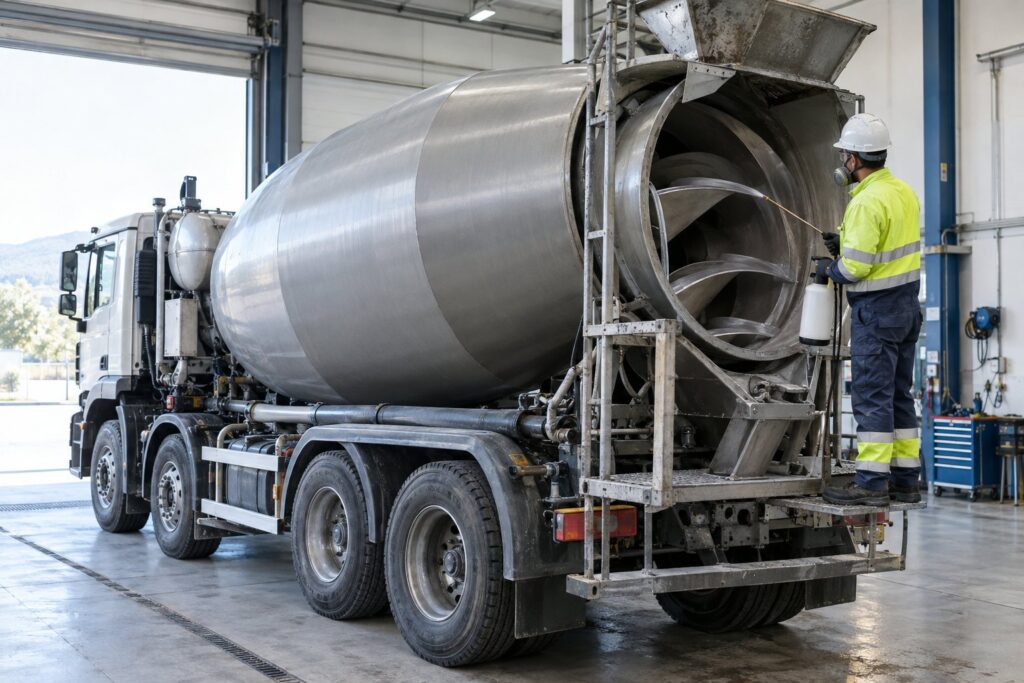
If the problem is in a concrete mixer drum or in delivery trucks, you may also want to consult our guide to cleaning concrete mixer trucks without acid and the article on how to remove hardened concrete without acid using Barracuda 10K. To reduce concrete adhesion on properly prepared concrete mixer drums and blades, there is a separate preventive treatment, Fusion RM, explained in the guide to anti-adhesive treatments for concrete mixers. Fusion RM does not remove concrete that has already hardened, so it is not a substitute for cleaning.
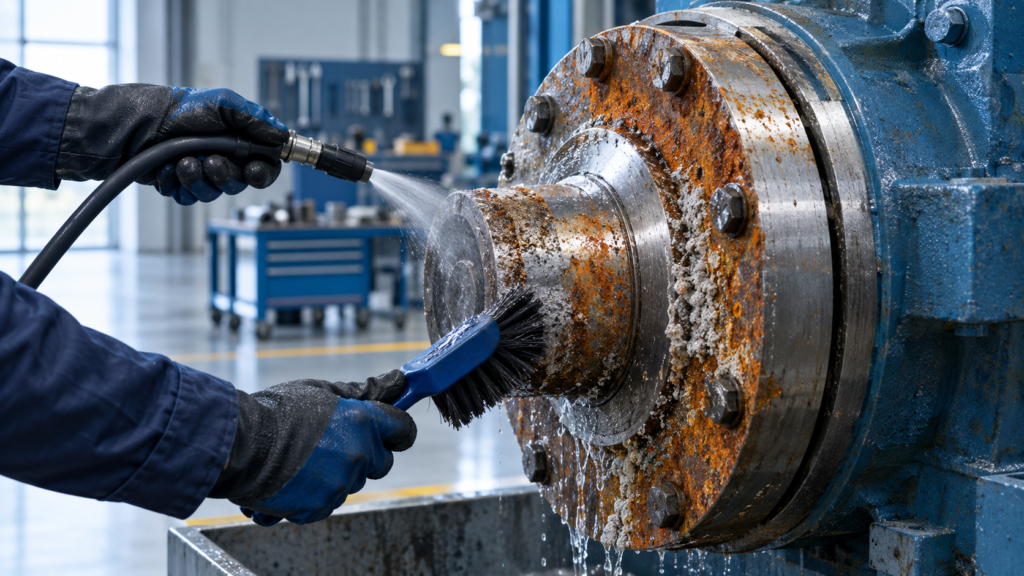
When molds or metal parts also have rust, you may find the guide on removing rust from machinery without acid helpful. If the underlying issue is replacing hydrochloric acid throughout the plant, the article on alternatives to hydrochloric acid in industrial cleaning compares EMS products by type of dirt.
6. Safety, REACH, and Washwater Management
A descaling agent that does not contain hydrochloric acid reduces several risks, but it does not eliminate the need for the procedure. Before incorporating Barracuda 10K into your cleaning routine, you should review the following points:
- Safety Data Sheet (SDS): This product may irritate the skin and eyes. Wear gloves, safety goggles, and the protective equipment specified in the SDS.
- Incompatibilities: Do not mix with strong oxidizing agents or other cleaning products.
- Washing area: Keep away from electrical panels and live equipment; ensure the floor is non-slip and equipped with a drainage system.
- REACH and Documentation: Keep the SDS up to date at the workstation and include the product in the facility's chemical risk assessment.
- Wash water: The product is biodegradable, but the water carries cement and fine particles. Let it settle, then dispose of it in accordance with the discharge permit or local regulations.
- Training: Explain to the operators the dilution ratio, the contact time, and why the solution should not be allowed to dry on the mold.
Recording the results of the first few cleanings (cleaning solution, dilution, duration, and outcome) allows you to adjust the procedure based on your own data rather than general estimates.
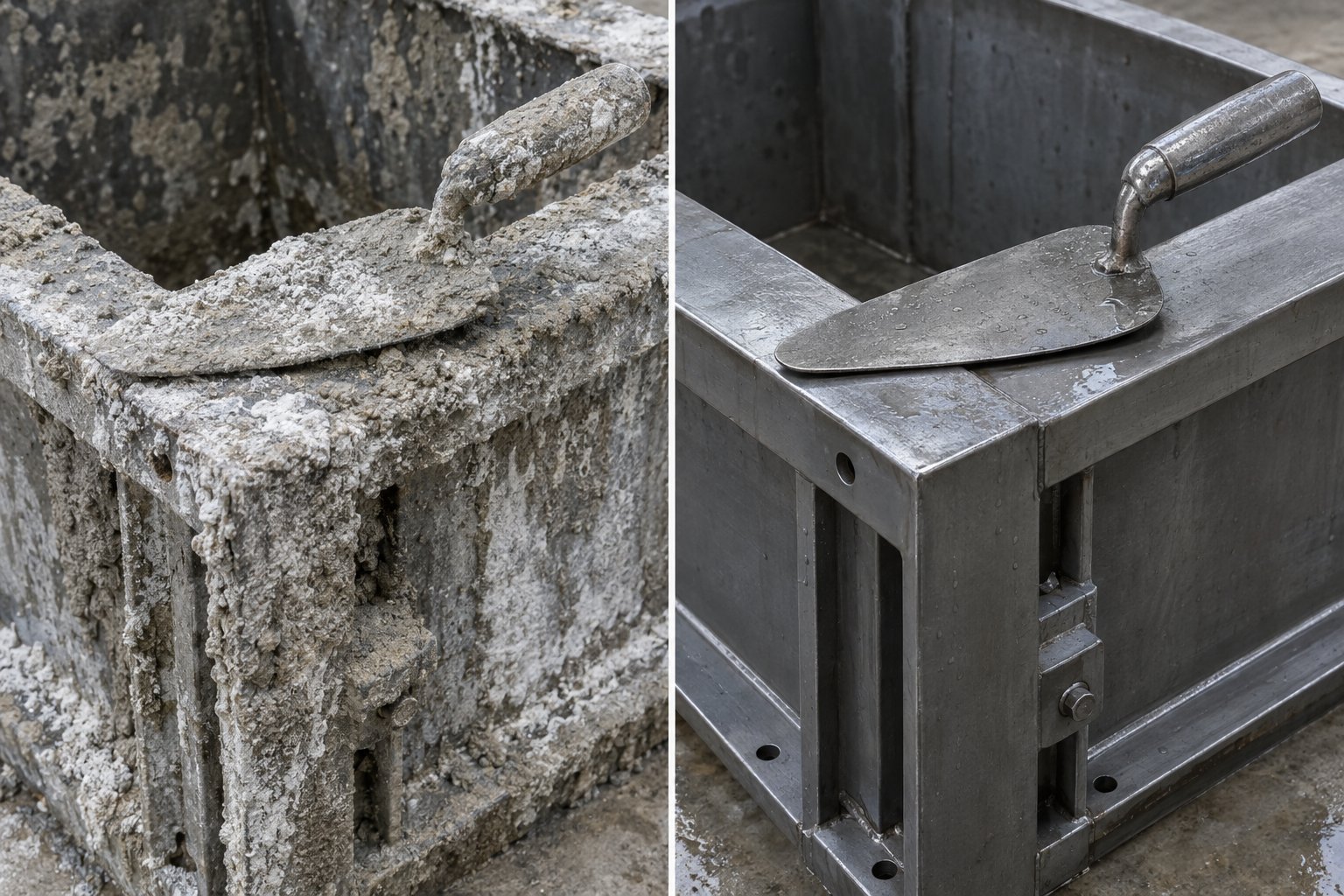
Illustration for reference only: does not correspond to a specific test. The actual result depends on the material, thickness, and age of the concrete.
7. Frequently Asked Questions About Barracuda 10K in Molds
Can I use Barracuda 10K in any type of mold?
Not without first testing. The Barracuda 10K documentation warns that the choice depends on the material and finish, and that certain low-quality chrome-plated and stainless steel surfaces may darken. For aluminum molds, coated surfaces, plastics, or resins, always perform a spot test and rinse thoroughly.
What dilution ratio should I use to clean concrete molds?
The technical data sheet includes a dilution chart based on the level of soiling, ranging from moderate to extreme cases. There is no single dilution that works for all molds: start with the mildest dilution appropriate for the thickness of the crust, and always check the current label.
Does Barracuda 10K replace the form release agent?
No. Barracuda 10K is a stripping agent used to remove hardened concrete, cement, and mortar. The release agent is applied afterward, to the clean, dry formwork, to facilitate subsequent demolding. These are two distinct steps in the same cycle.
Can tools be cleaned by immersion or with ultrasound?
The technical data sheet specifies immersion application and mentions its use in ultrasonic machines. For aluminum, copper, or tin-coated parts immersed in undiluted product, the data sheet recommends removing them after 15 minutes. Avoid immersing tools with electrical components.
Is it necessary to neutralize the wash water?
Barracuda 10K is formulated without hydrochloric acid and is reported to be biodegradable; therefore, the typical neutralization process required for a strong acid does not apply. However, the water contains cement and fine particles: let it settle, then dispose of it in accordance with local regulations or your facility’s discharge permit.
Conclusion
Cleaning concrete molds and tools without acid is a matter of method: remove excess material by wiping it dry, inspect the material, apply the appropriate dilution, do not let the solution dry, and rinse thoroughly. Barracuda 10K is specifically designed to remove hardened concrete, cement, and mortar from molds, tools, and concrete mixers, and allows for regular cleaning without relying on hydrochloric acid—always after conducting a preliminary test and following the technical data sheet.
Would you like to incorporate Barracuda 10K into your plant or workshop's cleaning routine?
Tell us about the type of molds, the materials, and your current method, and we'll prepare a proposal with the appropriate format and quantity.