Alternatives to Hydrochloric Acid in Industrial Cleaning: A Comprehensive Guide 2026
For decades, hydrochloric acid (HCl) has been the go-to solution for industrial cleaning: concrete mixers, concrete plants, swimming pools, boilers, heat exchangers, pipes, and metal surfaces. It is powerful, economical, and also one of the most dangerous chemicals a worker can handle. European regulations (REACH, CLP, Water Framework Directive) and occupational safety departments are pushing the industry toward safer alternatives to hydrochloric acid that are, surprisingly, just as effective. This guide explains the real problems with HCl, the families of substitutes available today, application scenarios by industry, and how to choose the right product.
1. The Real Problems with Hydrochloric Acid
Hydrochloric acid is classified in the EU as H314 (causes severe skin burns and serious eye damage) and H335 (may irritate the respiratory tract). In practice, this means aggressive vapors even at low concentrations, a real risk of chemical burns from splashes, and the mandatory use of full PPE: a protective suit, nitrile gloves, tight-fitting goggles, and a respirator with a specific filter. Accidents involving HCl remain a common cause of work-related sick leave due to chemical burns in the industrial cleaning and maintenance sector.
The acid does not distinguish between dirt and the base material. It attacks aluminum, galvanized steel, industrial paint, sound concrete, and elastomers. Repeated use shortens the service life of the machinery and increases maintenance costs: it is not uncommon for a concrete mixer truck to lose its paint and galvanized coating in less than two years due to routine use of acid.
Added to this are the environmental and legal costs. The acid used becomes hazardous waste that must be handled by an authorized waste management company, increasing the cost of each operation by 15% to 30%. When you factor in PPE, protocols, sick leave, corrosion, and waste management, the price per liter is no longer the key factor: the total cost exceeds that of nearly any modern alternative to hydrochloric acid.
2. Types of Alternatives to Hydrochloric Acid
Not all alternatives are the same. They can be grouped into five categories, based on their mechanism of action and risk profile. The choice depends on the type of deposit, the underlying material, and the application environment.
Weak organic acids (citric, glycolic, lactic) — dissolve lime and soft deposits through chelation. They are biodegradable and have low toxicity, but are not very effective on fresh concrete, hard oxides, or heavy lime deposits; they require long contact times. Mild inorganic acids (sulfamic, phosphoric)—controlled acid attack, with less steam; safer than HCl, useful in boilers and cooling towers, but they are still acids and will continue to corrode if the pH is not controlled.
Formulated alkaline detergents —hydroxides with surfactants that break down grease and protein; highly effective against organic dirt but do not attack mineral scale, and the most alkaline ones (caustic soda) pose the same safety concerns as acid at the opposite end of the pH spectrum. Enzymes and bacteria —microorganisms or proteins that break down organic dirt; safe and biodegradable, but ineffective against mineral scale and requiring controlled processing times and temperatures.
Advanced, pH-controlled synthetic substitutes (EMS technology) —molecules that react with scale (lime, cement, rust) without releasing aggressive hydrogen ions. They deliver the effectiveness of acid without the corrosiveness: they do not corrode metals, paint, or sound concrete; they are neither flammable nor explosive; they do not irritate the skin or respiratory tract under normal use; and they are biodegradable. The products in the EMS line—SynClean HD, Fortis, Ready Mix, WaterSafe60, Fusion, Purgo, CR2, BlowOut, and Barracuda 10K—belong to this family and are specifically designed as alternatives to hydrochloric acid in sectors where replacing it traditionally seemed impossible.
Would you like to try an alternative to acid in your operation?
EMS Cleaning can analyze the surface, the scale buildup, and the equipment, and propose a technical trial at your facility.
3. Before and After: What Really Changes
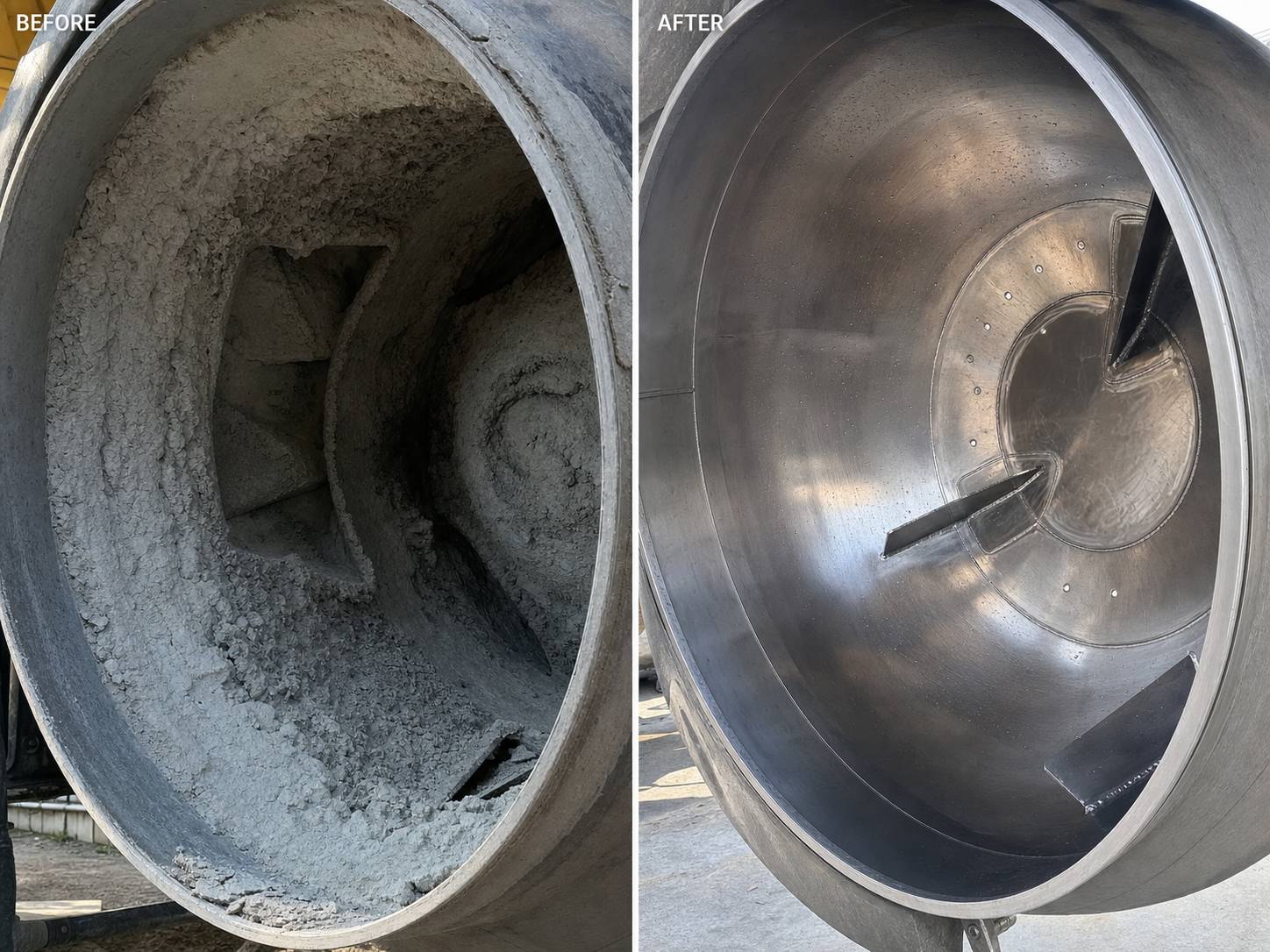
The first visual test of an alternative to hydrochloric acid is conducted on the most challenging surface in the operation. In a metallurgical plant, that surface is a steel structure covered with rust and lime after months of exposure to the elements or industrial processes. In a community swimming pool, it is the waterline covered with scale and lime. In a food processing plant, it is the heat exchanger coated with mineral lime and biofilm. The goal is not only to remove the buildup but also to verify that the underlying surface remains intact—whether it is paint, galvanized steel, mosaic tile, polyester, or steel, as the case may be.
The desired result is reproducible: the same contact time, the same dilution, and the same finish with every application. When the before-and-after results are documented with photos, dosages, and times, replacing the acid is no longer an isolated decision but becomes part of the maintenance procedure.
4. Application Examples by Sector
Metallurgy, industrial structures, and equipment. A classic problem: rust, scale, casting residue, and mineral deposits on steel, galvanized steel, cast iron, and painted surfaces. Traditional solution: 20–30% hydrochloric acid, resulting in the loss of galvanized coating and paint with each cleaning. Recommended alternative: Barracuda 10K —high-powered formula to remove rust and lime while preserving the integrity of the base metal and industrial paint. Compatible with protective coatings such as Fusion, which hinder re-adhesion and prevent further oxidation.
Swimming pools and water treatment. A common problem: lime, scale, and algae in pool basins, filters, and pumps. Traditional solution: hydrochloric acid or “salfumán.” Recommended alternative: WaterSafe60 — removes mineral deposits without damaging the pool lining (polyester, mosaic tile, reinforced PVC, exposed concrete) or causing long-term pH imbalances in the water.
Food and beverage industry. Common problem: scale buildup in heat exchangers, tanks, and CIP lines. Traditional solution: acid-base cycles using concentrated products. Recommended alternative: Purgo as a post-CIP sanitizer, along with neutral EMS cleaners compatible with food-contact surfaces.
Energy, boilers, and heat exchangers. A classic problem: mineral scale and biofilm in cooling circuits. Traditional solution: inhibited acid followed by neutralization. Recommended alternative: SynClean HD and CR2 — they prevent under-deposit corrosion and restore thermal efficiency.
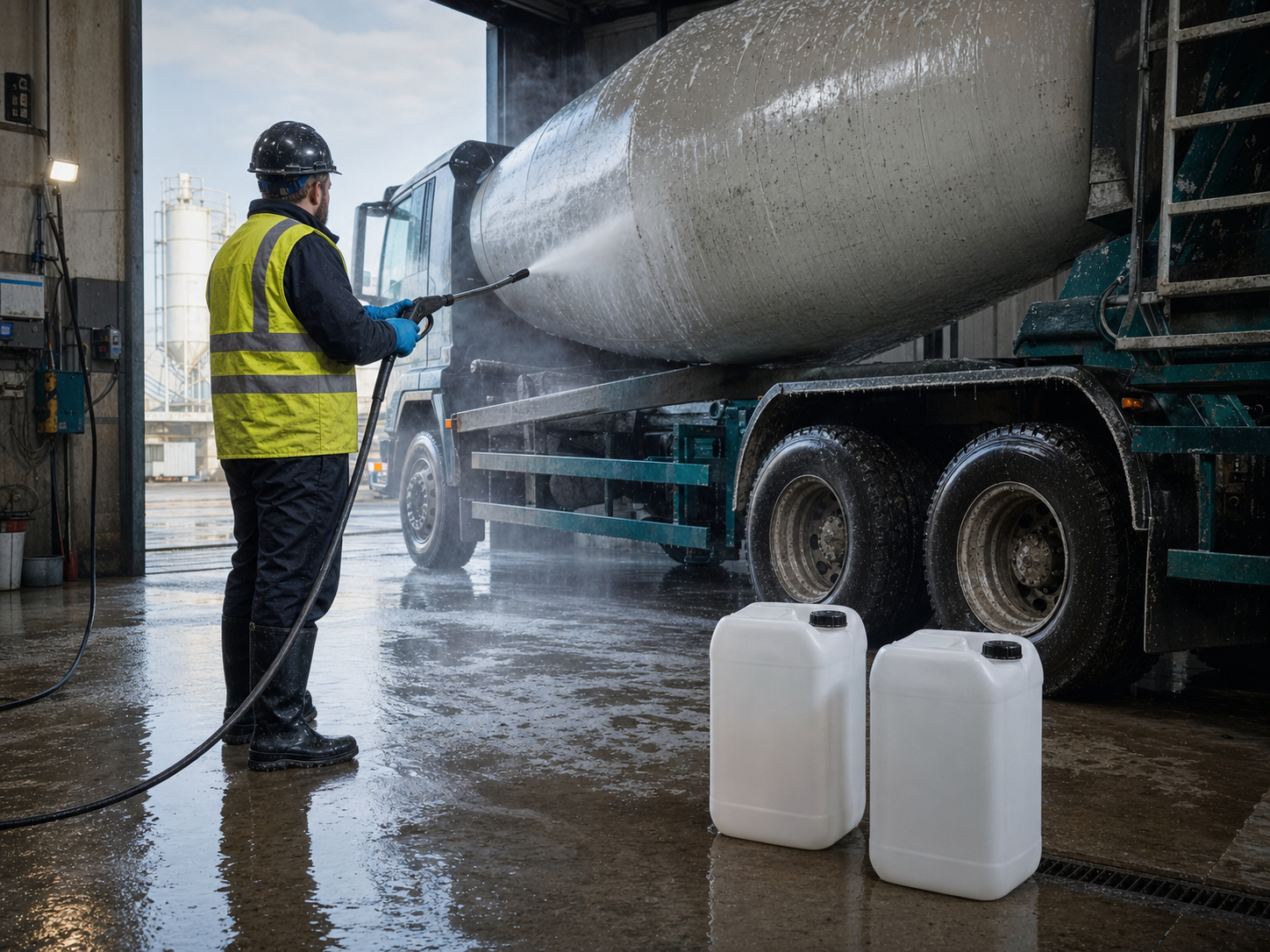
Concrete and concrete plants. A classic problem: fresh and dried concrete adhering to tanks, hoppers, frames, and chutes. Recommended alternative: Fortis or Ready Mix, which dissolve concrete without damaging paint or joints.
5. How to Choose the Right Option
To replace hydrochloric acid with a safe substitute, it is best to follow five steps in order. One: Determine the type of scale—soft lime is not the same as cured concrete or biofilm—and use a sample to confirm which product family to use. Two: Identify the underlying materials (aluminum, steel, paint, elastomers); the alternative must be compatible with all of them, not just the primary metal.
Three: Calculate the total cost, not the price per liter. Add up PPE, waste management, operator time, equipment damage, and lost workdays; the modern alternative almost always comes out on top. Four: Request samples and conduct a pilot test in a representative area before scaling up. Five: Train the team. Switching products also means changing procedures—dosage, contact time, temperature, lighter PPE—and training helps prevent common mistakes.
6. Common Mistakes When Substituting Hydrochloric Acid
The most common mistake is using the same dosage and contact time as with acid. Modern substitutes usually require a lower concentration but an adjusted contact time; applying them “as usual” leads to inconsistent results. The second mistake is not testing on a small test area before scaling up: any chemical needs to be validated on the actual surface and with the actual dirt.
The third mistake is to compare only the price per container and ignore hidden costs—PPE, waste, corrosion, time. The fourth is to rule out an alternative after a single attempt with a product that isn’t suitable for that specific scale buildup: every application has its own chemistry, and confusing a concrete cleaner with a pool descaler leads to incorrect conclusions.
7. Comparison: Hydrochloric Acid vs. EMS Alternatives
The following table lists the key variables for the technical decision; it is not a substitute for safety data sheets, instructions for use, or plant validation.
| Criterion | Hydrochloric acid (HCl) | EMS Alternatives (synthetic range) |
|---|---|---|
| Hazard Classification | H314: Corrosive; H335: Irritating to the respiratory system | Not corrosive or irritating under normal use, according to the safety data sheet |
| Compatibility with Metals and Paint | It corrodes aluminum, galvanized steel, and paint | Compatible with metals, paint, and elastomers |
| Waste Management | Hazardous waste, authorized waste manager | Biodegradable as per the product data sheet; comply with local disposal regulations |
| PPE required | Suit, gloves, goggles, mask with filter | Lightweight PPE as recommended by the product manufacturer |
| Cost per liter | Under | Upper |
| Total cost per transaction | Stop adding PPE, waste, and damage | Less than the sum of all the terms |
| Use on food contact surfaces | Not recommended | Flush designed as a post-CIP sanitizer |
Do you need to compare your current HCl with a specific alternative?
EMS Cleaning delivers samples and technical data sheets to companies in Spain and Portugal within 48–72 business hours.
8. Frequently Asked Questions
Are the alternatives to hydrochloric acid just as fast?
In most industrial applications, yes, and in many cases they are faster thanks to specific formulations. Barracuda 10K versus acid on rust and lime in metal structures is a typical example: equivalent effectiveness without damaging galvanized surfaces or industrial paint.
Can I pour EMS substitutes down the drain?
The EMS product line is biodegradable according to the technical data sheet, but local regulations regarding industrial waste disposal must always be followed. Consult the product data sheet and the relevant municipal or industry regulations.
How much does it cost to switch from acid to a substitute?
The substitute is usually more expensive per liter. In terms of total cost per operation—including PPE, waste management, equipment damage, and operator time—the alternative is usually more economical; the difference is calculated on a case-by-case basis using data from the operation.
Do I need to replace my cleaning equipment?
In most cases, no. EMS products work with the same sprayers, pumps, and high-pressure equipment that are already installed. The review is based on material compatibility, not on the equipment's technology.
Is it possible to completely eliminate hydrochloric acid from inventory?
It depends on the industry. In the concrete, swimming pool, food, and energy sectors, EMS Cleaning has replaced HCl in most common applications. In very specific operations, a controlled residual amount of inhibited acid may remain, but the realistic goal is to reduce it to the bare minimum.
9. Conclusion: Changing the acid without losing effectiveness
Hydrochloric acid is no longer the only option, and in many industries, it is no longer the best one. Alternatives to hydrochloric acid based on advanced chemistry, such as the EMS line, offer the same effectiveness against the toughest scale without posing risks to people, equipment, or the environment. The transition is carried out through diagnosis, sampling, pilot testing, and training; the total cost is reduced, and operations become safer and more traceable.
Start by running a test at your facility
Please send us a photo of the inlay and the material underneath it. We will send you a sample and a technical data sheet within 48–72 business hours.