
Caustic soda continues to be commonly used for degreasing in factories, but its true cost goes beyond the price per kilogram. It affects worker safety, training, wastewater management, maintenance, and, in some cases, insurance coverage. For this reason, procurement managers and technical directors are seeking a substitute for caustic soda that maintains performance without the risks associated with a strong corrosive.
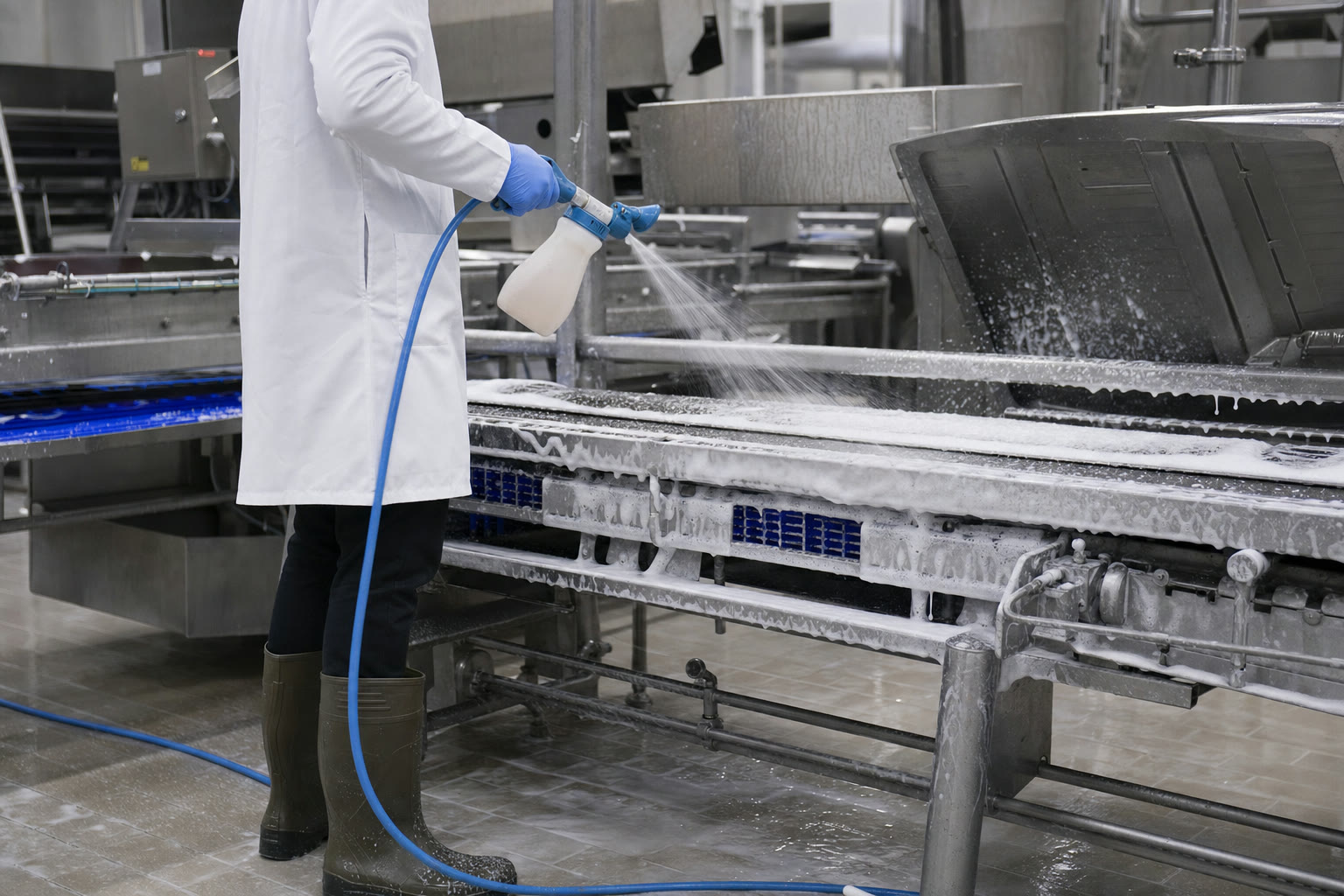
The European Green Deal and its goal of zero pollution promote prevention at the source, while industrial emissions regulations strengthen the control of environmental impacts (European Commission). Reducing dependence on corrosive products can be a technical, preventive, and economic decision.
SynClean HD, from EMS Cleaning, is an alternative to caustic soda for industrial cleaning and degreasing. It is not intended to replace any chemical stage in production; its value lies in cleaning operations where caustic soda is traditionally used, not because it is indispensable. Learn more about the solution at SynClean HD.
Why are companies looking for a substitute for caustic soda?
Caustic soda, or sodium hydroxide (NaOH), is effective against grease and organic dirt due to its high alkalinity. The downside is its hazardous nature: the European harmonized classification identifies NaOH as Skin Corr. 1A, H314 for concentrations of 5% or higher, posing a risk of severe burns and serious eye damage (ECHA).
Exposure may occur when receiving the product, preparing baths, measuring out doses, cleaning manually, maintaining pumps, or responding to a spill. Splashes pose an immediate risk; mists can affect the respiratory tract. Protection requires procedures, storage, signage, and PPE appropriate for the workstation.
When making purchases, the most useful metric is the total cost of ownership, which includes:
- product, water, and energy consumption;
- preparation, application, and curing time;
- training, PPE, supervision, and incident response;
- maintenance due to corrosion or incompatibilities;
- neutralization, analysis, and wastewater management.
REACH, CLP, and the Control of Discharges
REACH and CLP do not generally prohibit caustic soda, but they require that its risks be identified, classified, labeled, and managed. The safety data sheet (SDS), the risk assessment, and the work procedure must guide every use. If an alternative is technically feasible, replacing a hazard at the source strengthens prevention.
In wastewater, extremely high alkalinity may require neutralization before discharge. There is no single limit that applies to all facilities: it is defined by the permit, the wastewater treatment operator, the city government, or the watershed authority. A very high pH—for example, above 11—is unlikely to meet standard discharge limits without pretreatment; failure to comply may result in surcharges, investigations, or penalties, depending on the applicable regulations.
Neutralization involves acid, dosing, testing, maintenance, and potential issues. Therefore, an industrial cleaning strategy that does not use caustic soda can reduce the need for subsequent corrective action, provided that the cleaning results and the actual effluent are validated.
SynClean HD — EMS's patented technology
SynClean HD is a concentrated industrial cleaner and degreaser from EMS Cleaning. It is designed to remove grease, oil, proteins, and stubborn dirt without relying on aggressive solvents or the corrosiveness of lye. EMS markets it as a high-performance substitute for caustic agents and solvents; it is butyl-free, non-corrosive, and non-toxic under the specified conditions of use (EMS Cleaning).
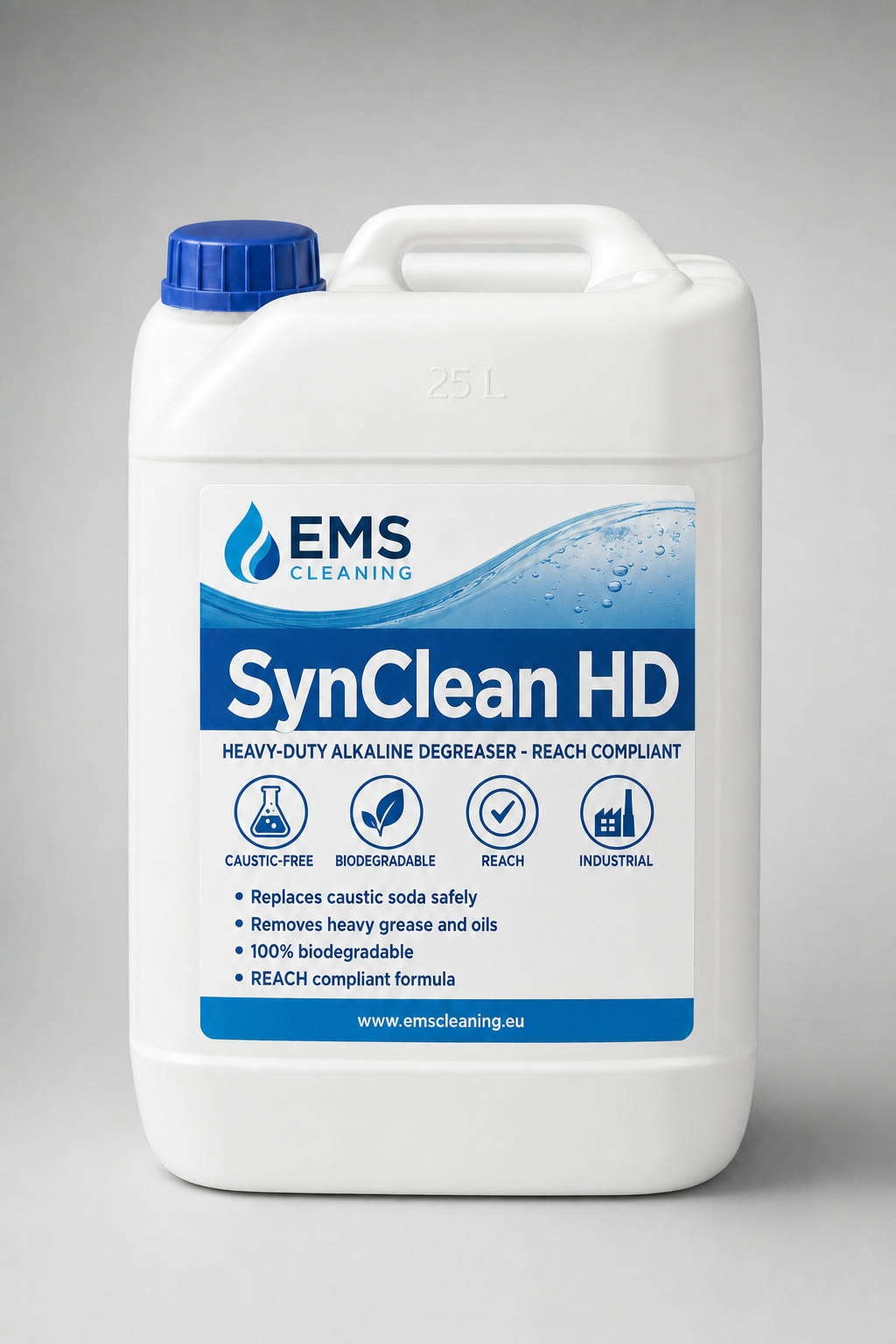
The approach is to lift and loosen dirt to make it easier to remove, rather than aggressively attacking the substrate. This approach can help protect equipment and finishes on surfaces such as stainless steel, machinery, glass, and other compatible materials.
EMS claims to have patented technology, patents on five key substances, and more than 100 formulations (EMS Cleaning). For B2B buyers, this makes it easier to select the appropriate concentration and application method based on the actual level of soiling, without using a cleaning solution that is overly harsh.
Features for Safe Cleaning
EMS claims that its products are biodegradable in less than ten days and markets SynClean as a high-pH substitute for caustics and solvents (EMS Cleaning). Before including it in a purchase specification, verify the local MSDS, the pH of the diluted solution, the commercial formulation, and the applicable test method.
During the test, evaluate these characteristics:
- removal of animal, vegetable, and mineral fats, as well as protein residues;
- a formulation that is stated to be free of butyls and harsh solvents;
- non-corrosive on compatible surfaces;
- application with cold or hot water, spraying, scrubbing, rotary equipment, or steam;
- the option to use a pH-neutral cleaner or one with moderate alkalinity when the formulation and the task allow it;
- Claimed biodegradability and potential simplification of operational management.
All industrial detergents must be used in accordance with their SDS. PPE is determined by the job-specific risk assessment. The goal is to reduce the controls typically required for a strong corrosive, not to replace prevention with a marketing promise.
Comparison — Caustic Soda vs. SynClean HD
| Parameter | Caustic soda (NaOH) | SynClean HD |
|---|---|---|
| pH | 13–14 in concentrated solutions | Moderately neutral to alkaline pH, depending on formulation and dilution; check the MSDS |
| CLP Toxicity | Category 1A / H314 at concentrations of ≥ 5% | Not classified as hazardous according to the applicable commercial MSDS; confirm local version |
| Biodegradability | 0%: inorganic substance, non-biodegradable | >90% in 10 days; EMS claims biodegradability in less than ten days |
| Risk to workers | High: burns and eye damage | Low; no special PPE required for corrosive substances, always in accordance with the SDS and risk assessment |
| Water Treatment | Routine neutralization and pH control | Direct download* when permitted by local regulations |
| Material Compatibility | It can corrode aluminum, zinc, and sensitive materials | Declared non-corrosive; perform a compatibility test |
\*Biodegradability or a favorable classification do not, by themselves, authorize direct discharge. Always check the applicable discharge limits.
The difference isn't just a matter of switching out a container. With caustic soda, performance relies on extreme alkalinity, which requires risk management; with SynClean HD, the solution focuses on degreasing with a formulation designed for safety, compatibility, and easier handling.
Industries where SynClean HD replaces caustic soda
Substitution is validated on a per-application basis. A test must verify concentration, contact time, temperature, mechanical action, and result. These are common scenarios.
Food Industry
In tanks, pipes, equipment, and production areas, cleaning must be repeatable without compromising surfaces or causing downtime. EMS recommends SynClean HD for food and beverage facilities and for CIP systems (EMS Cleaning). Validation must include rinsing, seals, hygiene protocols, and the plant’s food safety requirements.
Metallurgy
To degrease parts, tools, workbenches, or housings, an alternative to caustic soda can remove oils and greases without causing unnecessary damage to certain materials. This is particularly useful for light alloys, painted parts, or finishes that need to be preserved. Always test on representative dirt, not just on a new surface.
Automotive and Chassis
Chassis, workshops, fleets, and engine compartments accumulate mineral grease, dust, and road debris. SynClean HD can be used with manual cleaning, low-pressure cleaning, or rotary equipment by adjusting the dilution ratio. The goal is to shorten the cleaning cycle and prevent corrosive substances from reaching connections, finishes, or sensitive components.
Textiles and Paper
Rollers, floors, auxiliary equipment, and maintenance areas require efficiency in asset maintenance. Biodegradable cleaning products can help manage consumption, washwater, and safety protocols. However, it is important to distinguish between a cleaning operation and a chemical step that is essential to the production process.
Real-World Application Example
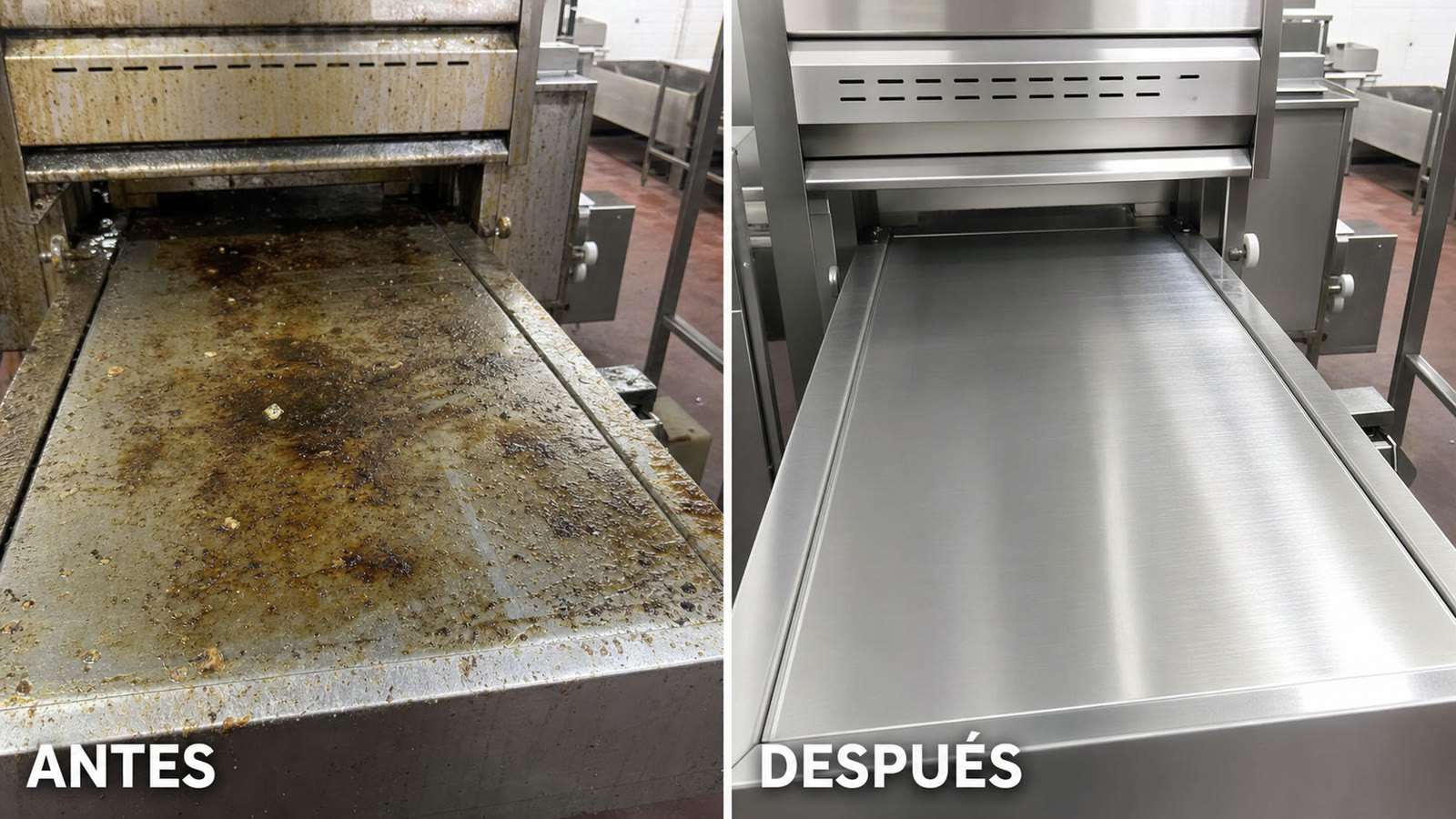
Representative Case Study (Simulated): Food Processing Plant in Catalonia
A refrigerated food processing plant used sodium hydroxide to clean auxiliary tanks, carts, and preparation areas. Management wanted to reduce exposure, minimize the need for specialized training, and adjust pH levels without compromising hygiene standards.
Following an audit, SynClean HD was tested on carts, stainless steel, and the exterior surfaces of equipment. The dilution ratio, contact time, and mechanical action were adjusted, and consumption, minutes per cycle, and operational results were compared.
In this simulated case, the plant eliminated caustic soda from those three tasks—not from all of its processes—and reduced expenses related to training, PPE for corrosive chemicals, and the neutralization of those washwaters. The reduced inventory of corrosive chemicals was discussed with the insurance company. By combining operational savings, pH adjusters, and reduced preparation time, the project achieved an estimated ROI of six months.
How to Try SynClean HD with No Obligation
Start with a specific, high-usage or high-risk application, and document the current method. EMS Cleaning España can provide a technical and economic comparison:
1. Request a free sample using the quote request form, specifying the type of dirt, material, surface, and application method. 2. Receive a technical assessment of concentration, contact time, temperature, and mechanical action. 3. Conduct a controlled test and measure cleaning performance, consumption, time, compatibility, safety, and rinse water. 4. Review the MSDS and discharge requirements before implementing the solution as part of your routine.
For a safe industrial cleaning project, contact EMS Cleaning Spain at +34 634 293 241 or request a quote at /cotizacion/. Learn more about the company at /ems/.
Conclusion
Finding a substitute for caustic soda does not mean lowering cleaning standards. It means determining whether a highly corrosive substance is still the right tool for each task. SynClean HD offers a way to degrease using a formulation that EMS describes as non-toxic, non-corrosive, and biodegradable, with the potential to reduce risks, simplify operations, and protect surfaces.
The decision requires testing, an SDS, compatibility assessment, and verification of discharges. If your facility uses caustic soda for routine cleaning, start with a high-impact task, calculate the total cost, and contact EMS Cleaning to request a technical test.