
The cleanliness of concrete mixer trucks directly affects fleet availability, equipment safety, and the company’s image. Each unloading leaves behind cement and slurry, which, if not removed, harden on the channels, tires, frame, and drum. This increases dead weight, hinders inspections, and multiplies the number of hours spent on manual cleaning.
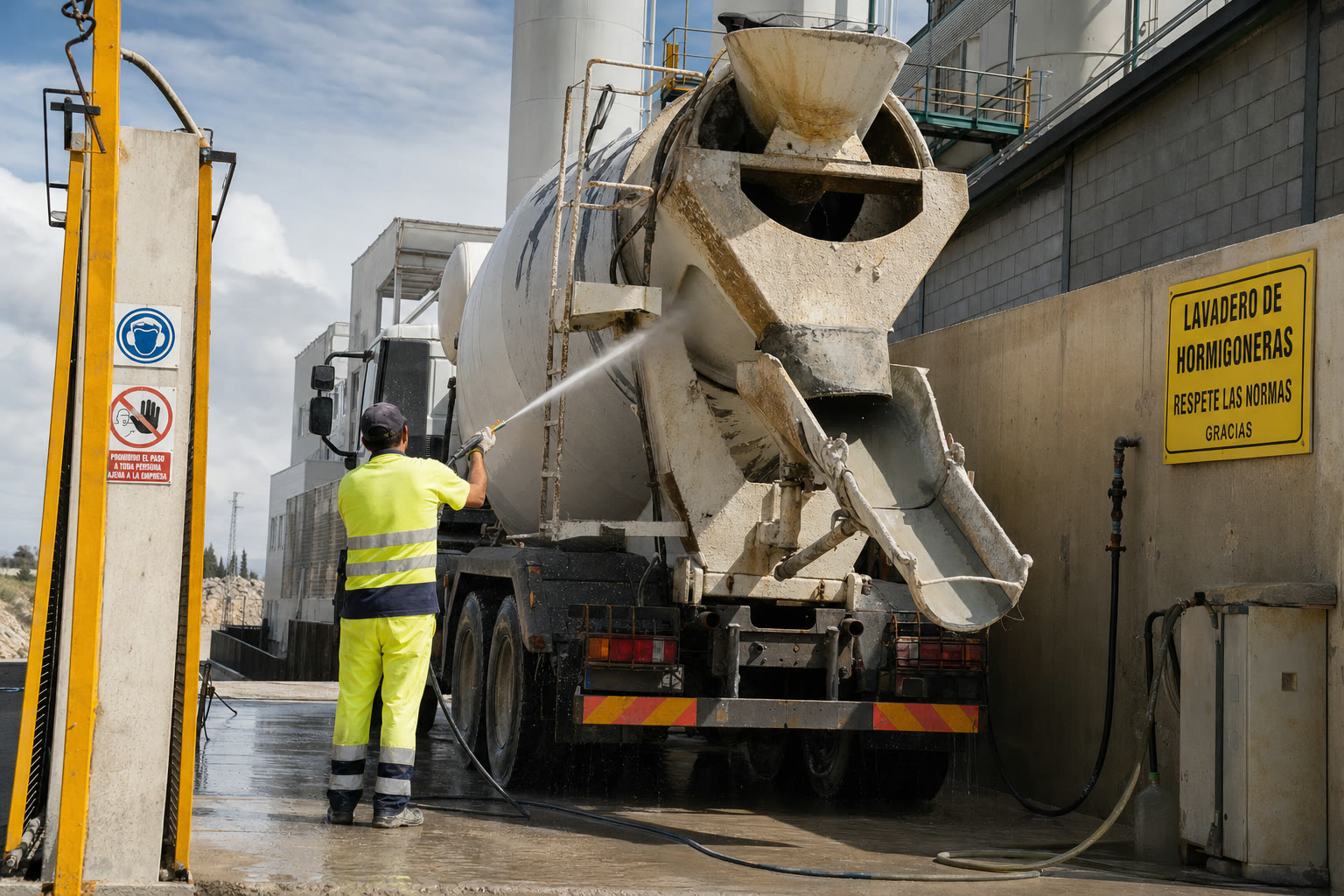
Many facilities have turned to hydrochloric acid. However, splashes, fumes, corrosion, and waste management make this practice an operational and preventive cost. A safer alternative is to act early and use Fortis EMS and Ready Mix , an EMS Cleaning cleaner that contains no harsh acids.
To clean a concrete truck professionally, it’s not enough to wait until a visible crust appears. A non-aggressive, acid-free concrete descaler, applied as part of a routine, helps keep the truck in good working order and under control.
The Problem of Stuck Concrete in the Construction Industry
Concrete quickly adheres to the drum opening, hoppers, chutes, steps, wheels, and sides. If the fresh residue is not removed at the end of the shift, it hardens, and cleaning requires more time, water, and power tools. In addition, it can hide cracks, fasteners, or fluid leaks.
The cost of a stoppage includes unproductive hours, travel, labor, water, and lost service opportunities. If a concrete mixer generates an internal cost of €95 per hour, three hours of chipping and washing amount to €285—not including the cost of the product or rescheduling. Repeating this process reduces delivery capacity.
The weight of the material that has adhered to the surface also makes it difficult to access the concrete mixer for maintenance and can hide minor issues. Preventing buildup allows for faster inspections and visual checks.
The traditional method, which relies on 30% hydrochloric acid and mechanical action, requires careful control of contact, ventilation, splashes, and rinsing. If not applied properly, it can damage the truck’s surfaces.
Why should hydrochloric acid be avoided when cleaning concrete mixers?
Concentrated hydrochloric acid is typically classified as a corrosive under the CLP Regulation; it is not a common detergent. It requires a workplace assessment, consultation of the safety data sheet, staff training, and the establishment of emergency procedures.
Paint, aluminum, chrome-plated parts, gaskets, rubber, plastics, and metal fittings may be damaged if the product is not used or rinsed off thoroughly. Vapors can reach unexpected areas, and a quick cleanup can result in corrosion or the need to replace gaskets.
Corrosive substances require compatible containers, proper labeling, controlled access, and safety documentation. Poor management can result in penalties.
Wash water is not harmless: the pH, solids content, and discharge must comply with the authorized system. Avoiding harsh acids reduces the risk, but does not eliminate the obligation to manage the water in accordance with local requirements.
Fortis — acid-free cleaner for fresh and dry concrete
Fortis is a concentrated, multipurpose cleaner from EMS designed to replace processes that rely on harsh chemicals. It is effective against fresh cement, road grime, grease, soot, and unpleasant odors, and provides a consistent exterior cleaning solution without the use of harsh mineral acids.
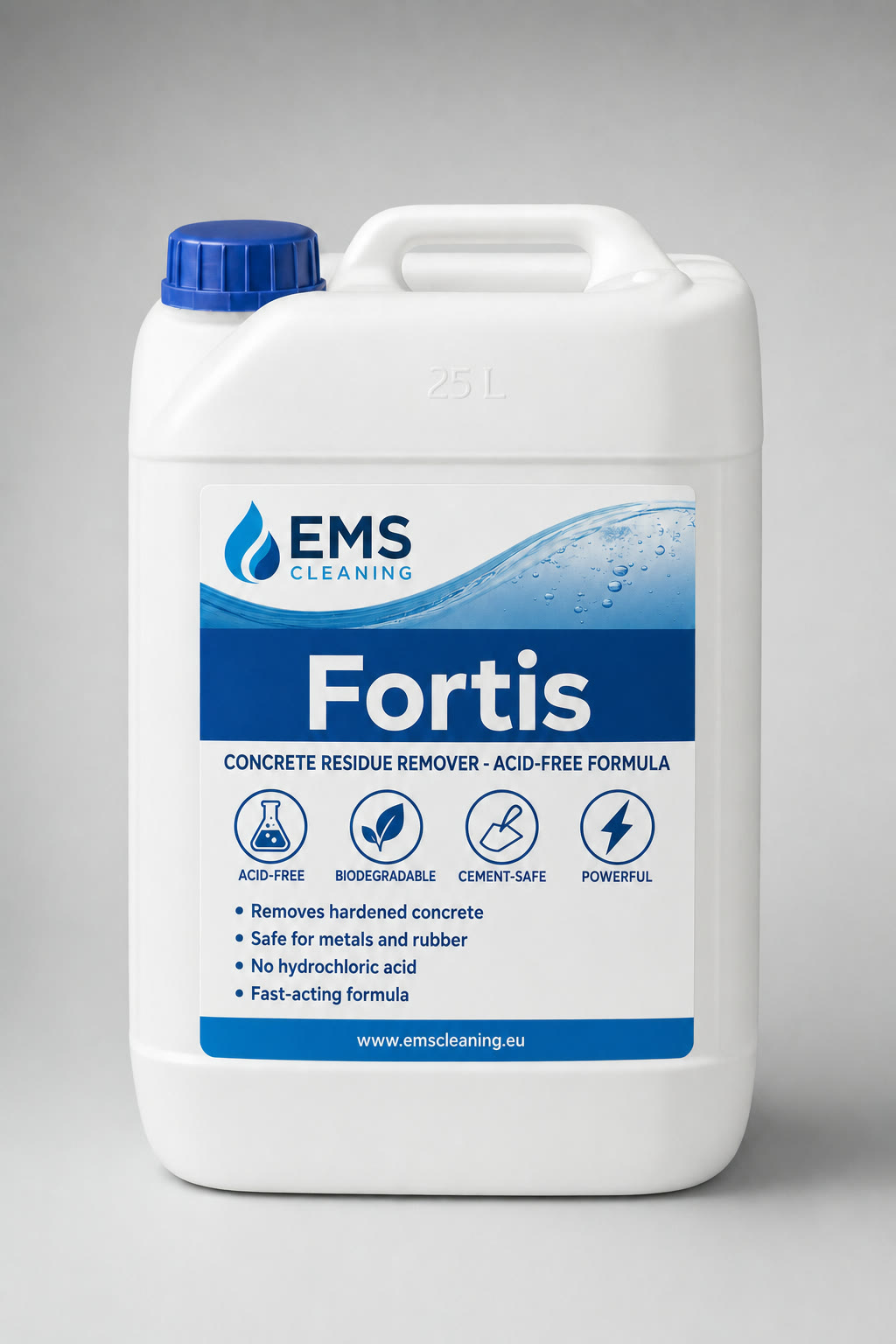
It loosens dirt and stubborn buildup so that brushing and rinsing can remove them with less effort. Treat the residue as soon as possible, prevent the solution from drying, and test it first on old or thick layers of concrete.
Fortis EMS is suitable for exterior body panels, chassis, wheel wells, drain channels, hoppers, tools, and cargo areas. It makes the areas that need to be inspected visible; test it first on an inconspicuous area and follow the technical data sheet.
Its designed compatibility with paint, aluminum, glass, and metal helps ensure effective cleaning without compromising the protection of the equipment, provided the recommended dilution and rinsing procedures are followed. Consult Fortis to confirm the best procedure for your fleet.
Ready Mix — solution for concrete mixers and plants
Ready Mix It has been developed to clean and maintain concrete mixer trucks. It combines the removal of concrete residue and road grime with finish protection to reduce re-adhesion at the end of each shift.
In the mobile unit, Ready Mix cleaner can be used on exterior surfaces exposed to grout, cement, dust, and grease. In the plant, it facilitates the cleaning of chutes and compatible transfer areas; for the interior of the drum, apply only a validated protocol and never enter without power isolation, a work permit, and confined space procedures.
The greatest savings occur after unloading, before the material gains strength. Careful application prevents rework, reduces the amount of rinse water needed, and shortens the brushing time.
Ready Mix It does not replace inspections, purges, or the manufacturer's instructions, but it does allow for the integration of cleaning and visual maintenance into a standardized routine. Defining dosage and contact time prevents each shift from working according to different criteria.
Fortis vs. Ready Mix — Which One Should You Choose?
The choice depends on where the dirt is located, how old it is, and how often the work is performed. Both products can be part of a strategy to dissolve concrete without using harsh acids, but they serve different operational purposes.
| Criterion | Fortis | Ready Mix |
|---|---|---|
| Primary use | Outdoor Use and Multipurpose Cleaning | Concrete Mixer Trucks and Specialized Maintenance |
| Type of dirt | Fresh concrete, grease, construction debris, and road dirt | Concrete debris, road grime, and the unit's finish |
| Frequency | On time or as part of the scheduled exterior cleaning | Daily, after unloading or at the end of the shift |
| Common Areas | Cuba exterior, chassis, gutters, tools | Exterior of the concrete mixer and compatible work areas |
| Objective | Restore the cleanliness and visibility of components | Maintain the vehicle and reduce future traction |
Fortis can reinforce exterior components and handle mixed debris, whil Ready Mix s the concrete mixer's operation. Test the system on a representative unit before rolling it out across the entire fleet.
Recommended Cleaning Protocol for a Concrete Mixer Truck
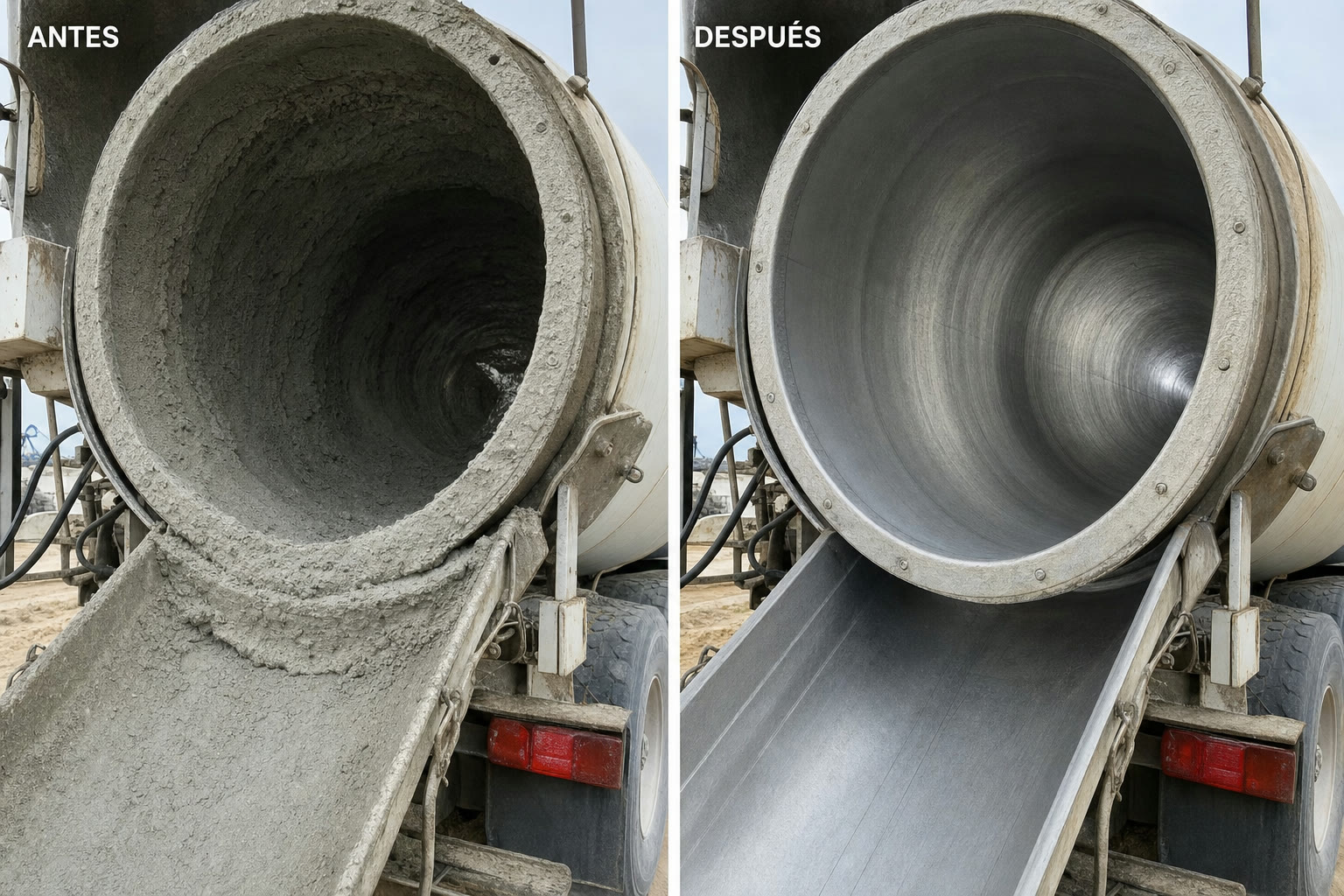
A simple, documented protocol is more effective than cleaning only when the truck has visible deposits. Tailor it to the technical specifications, the manufacturer, and your internal policies.
1. Take action after each shift or critical load. First remove any loose debris and wash the drum, chutes, and hoppers before the concrete sets. Schedule a weekly exterior check and a more thorough inspection based on each unit’s usage. 2. Mark off and prepare the area. Park in an authorized washing area, secure the vehicle, and ensure adequate ventilation. Use the protective equipment specified in the safety data sheet, even if the product is a non-aggressive, acid-free alternative. 3. Prepare the recommended dilution. For Fortis, a general guideline is between 1:10 and 1:5 depending on the level of dirt; for Ready Mix, follow the dosage specified for the specific application. Always check the label and the current technical data sheet, as the final concentration depends on the surface, the application equipment, and the condition of the residue. 4. Apply from the bottom up and let it sit. Cover the area without saturating joints or electrical components. As a guideline, a contact time of 2 to 10 minutes is usually sufficient for the product to work; do not let it dry, and do not exceed the manufacturer’s instructions. 5. Scrub where necessary. Use appropriate brushes to avoid damaging paint or finishes. Avoid vigorous scrubbing as a routine procedure: reserve it for assessed cases using appropriate tools and protective equipment. 6. Rinse with water and check the results. Completely remove the solution and any loosened debris and dispose of them in an authorized collection system. Inspect gutters, steps, lights, joints, and areas of corrosion to document any issues before the truck returns to service.
Economic and Environmental Benefits
The return on investment for preventive cleaning is calculated by comparing the cost of the program with the hours of downtime it prevents. Let’s assume a fleet of five concrete mixers and a conservative reduction of one hour of rough cleaning or repeat washing per vehicle per week. With an internal cost of €95 per hour and 48 operational weeks, the potential gross savings would be €22,800 per year (5 × 1 × 95 × 48), before deducting the cost of cleaning products, water, cleaning labor, and implementation costs.
This is not a guarantee of savings: each route and mix affects the outcome. Track time, stops, and water usage during a pilot test to calculate your own ROI.
From an environmental and compliance perspective, products with documented composition and labeling facilitate assessment under REACH. Request the safety data sheet, maintain training records, and manage effluent in accordance with your facility’s authorization.
Reduced exposure to corrosive substances can strengthen negotiations with insurers and support loss prevention efforts. While there is no automatic premium reduction, written procedures, training, and a controlled claims history improve the risk profile.
Request a free sample
Would you like to see how Fortis and Ready Mix fit into your concrete mixer truck cleaning routine? Request a free sample and specify the number of vehicles, type of dirt, and washing frequency. EMS can help you design a controlled test.
Access the quote request form or contact EMS Cleaning at +34 634 293 241. Before rolling out the trial to your entire fleet, compare wash time, product consumption, water usage, and the condition of the paint, aluminum, and rubber.
Conclusion
Concrete buildup should not be considered an inevitable consequence of transporting ready-mix concrete. An early cleaning routine, using the appropriate product and controlled rinsing, reduces downtime, facilitates mixer maintenance, and improves worker safety. Replacing hydrochloric acid with a strategy that does not involve aggressive acids allows the problem to be addressed without adding corrosion, vapors, and disproportionate risk management.
Fortis offers versatility for exterior cleaning and mixed dirt; Ready Mix is tailored to the specific needs of concrete mixer trucks. Request a trial, evaluate the results in your own operation, and establish a protocol that protects your fleet’s daily availability.