
In a food processing plant, disinfection is no longer just about reducing the microbial load: it means demonstrating control, protecting consumers, and maintaining operational continuity. European regulatory pressure, HACCP requirements, and the demands of customers and certification bodies make it necessary to evaluate both the effectiveness and the impact of every product used. For this reason, choosing a biodegradable disinfectant for the food industry has become a strategic decision for quality, production, and maintenance.
Regulation (EC) No. 1935/2004 reinforces the need to prevent migration or contamination that could compromise food safety, while the HACCP approach requires identifying and controlling hazards at each stage. However, programs based exclusively on chlorine, quaternary ammonium compounds, or peracetic acid can pose challenges related to corrosion, residues, workplace safety, and environmental management. Purgo, from EMS Cleaning, offers an alternative for food cleaning and disinfection with a broad spectrum of efficacy, biodegradability exceeding 90%, and an operational design tailored for industrial environments.
Legal Requirements for Disinfection in the Food Industry
Regulation (EC) No. 852/2004 establishes general food hygiene rules. Facilities, equipment, premises, and surfaces must be kept clean and, where appropriate, disinfected without introducing risks: cleaning removes dirt and organic matter; disinfecting reduces microorganisms to a safe level.
Regulation (EU) No. 528/2012 governs the marketing and use of biocidal products. Before selecting an HACCP-compliant disinfectant, check the intended use, safety information, and applicable instructions; the claimed efficacy does not replace validation on your production line, with its specific surface, type of contamination, temperature, and contact time.
The HACCP system is based on solid prerequisites: cleaning and disinfection, water control, maintenance, training, pest control, and traceability. The chosen product must allow for the verifiable definition of concentrations, frequencies, responsible parties, records, and corrective actions.
IFS, BRCGS, and FSSC 22000 raise the bar for documentation requirements. During an audit, it must be demonstrated why the product was chosen, how it is applied, what training the operator received, and how the results are verified. EMS Cleaning helps align the product, consulting, and documentation.
Limitations of Traditional Disinfectants
Sodium hypochlorite is commonly used because of its availability and disinfecting power. However, chlorine can react with organic matter and produce byproducts such as trihalomethanes and chloramines; it also requires careful dosing and ventilation, especially during manual tasks.
In stainless steel, chlorine can accelerate corrosion, pitting, and deterioration when used improperly or repeatedly. A damaged surface is harder to clean and can harbor biofilms, so limiting the use of harsh chemicals is also a maintenance decision.
Quaternary ammonium compounds have limitations when used against certain Gram-negative bacteria and may leave surface residues. Their continued use requires monitoring of rinsing and compatibility; the technical literature has documented mechanisms of tolerance or resistance associated with certain compounds in this class.
Peracetic acid is powerful, but it can be difficult to handle. Its vapors and its irritating or oxidizing properties require enhanced protection, training, and exposure control; reducing operational hazards helps prevent incidents.
Purgo — a biodegradable disinfectant from EMS Cleaning
Purgo EMS is EMS Cleaning’s solution for eco-friendly industrial disinfection without compromising microbiological control. It is incorporated into hygiene protocols for surfaces, equipment, and systems where safety, traceability, and environmental impact are equally important.
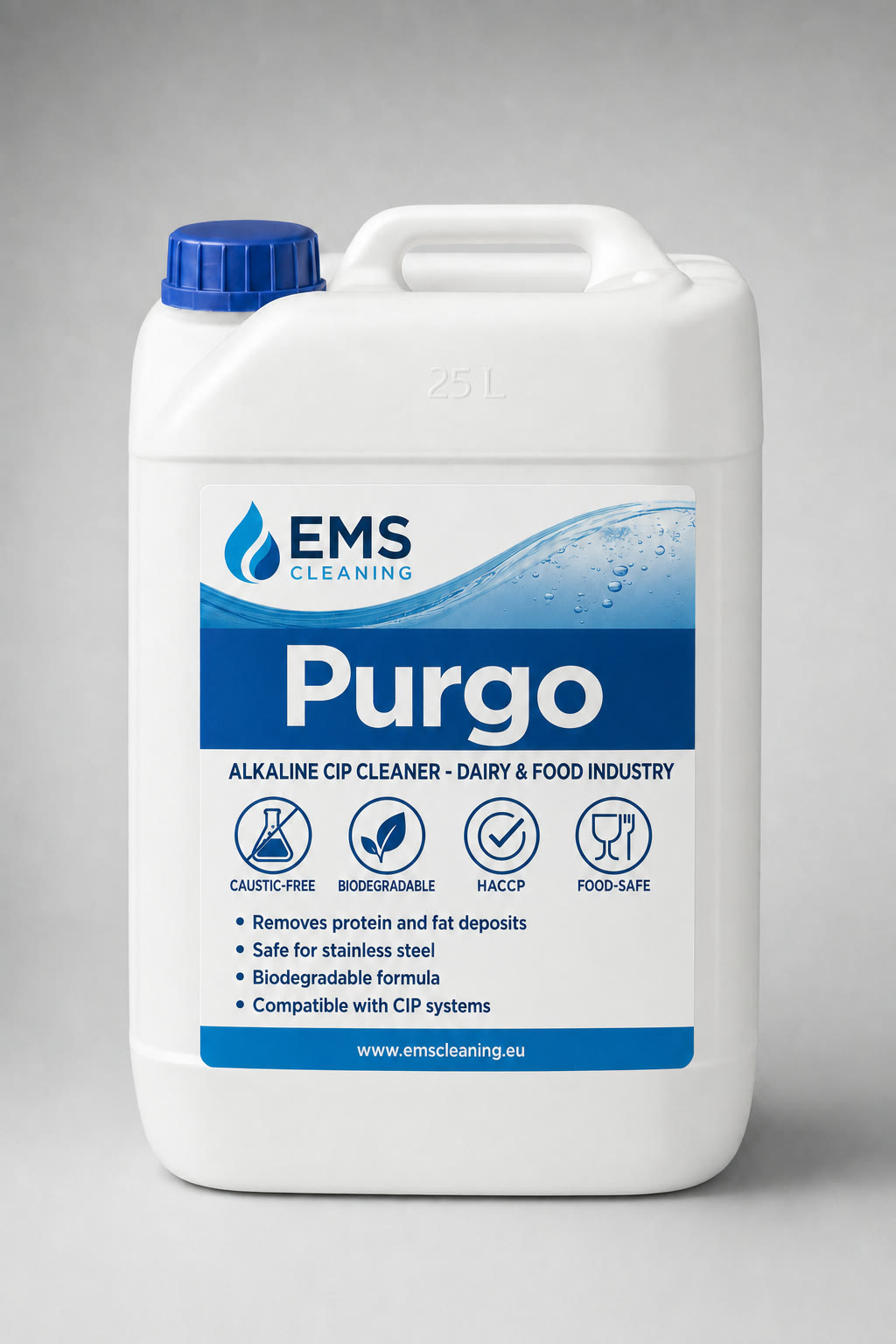
According to EMS Cleaning's technical documentation, Purgo offers broad-spectrum protection against bacteria, fungi, viruses, and spores. The concentration and contact time must be determined based on the technical data sheet, the target microorganism, and validation under the actual conditions at your facility.
Its safety profile is unique: Purgo is not classified as hazardous under the conditions specified in its documentation and leaves no toxic residues when used correctly. For surfaces that come into contact with food, follow the authorized procedure and confirm with the technical team whether rinsing is necessary.
With biodegradability exceeding 90%, Purgo aligns with policies aimed at reducing environmental impact. Its true advantage becomes apparent when the solution also protects assets, integrates into daily routines, and provides evidence of quality—thus positioning itself as an industrial chlorine-free disinfectant.
Technical Advantages of Purge in HACCP
In HACCP, effectiveness must be reproducible. Purge can be integrated into NEP (Nettoyage En Place) or CIP (*Cleaning in Place*) systems to clean and disinfect circuits, tanks, and pipes without disassembly; this helps standardize cycles and reduce manual intervention.
For certain applications and after validation, Purgo can be applied without rinsing. This can save water, time, and energy, but it is not a universal solution: the surface, food product, regulations, and instructions for use are all determining factors. Validate the protocol with EMS Cleaning before changing the procedure.
According to EMS Cleaning, Purgo works through a mechanism that does not promote microbial resistance. Surface monitoring, microbiological testing, and periodic inspections remain essential to confirm the results and sustain continuous improvement.
Traceability is another practical advantage: technical and safety data sheets, instructions, batch records, and validation records. This foundation makes it possible to demonstrate that selection, application, and verification are consistent with HACCP and customer requirements.
Specific Applications by Subsector
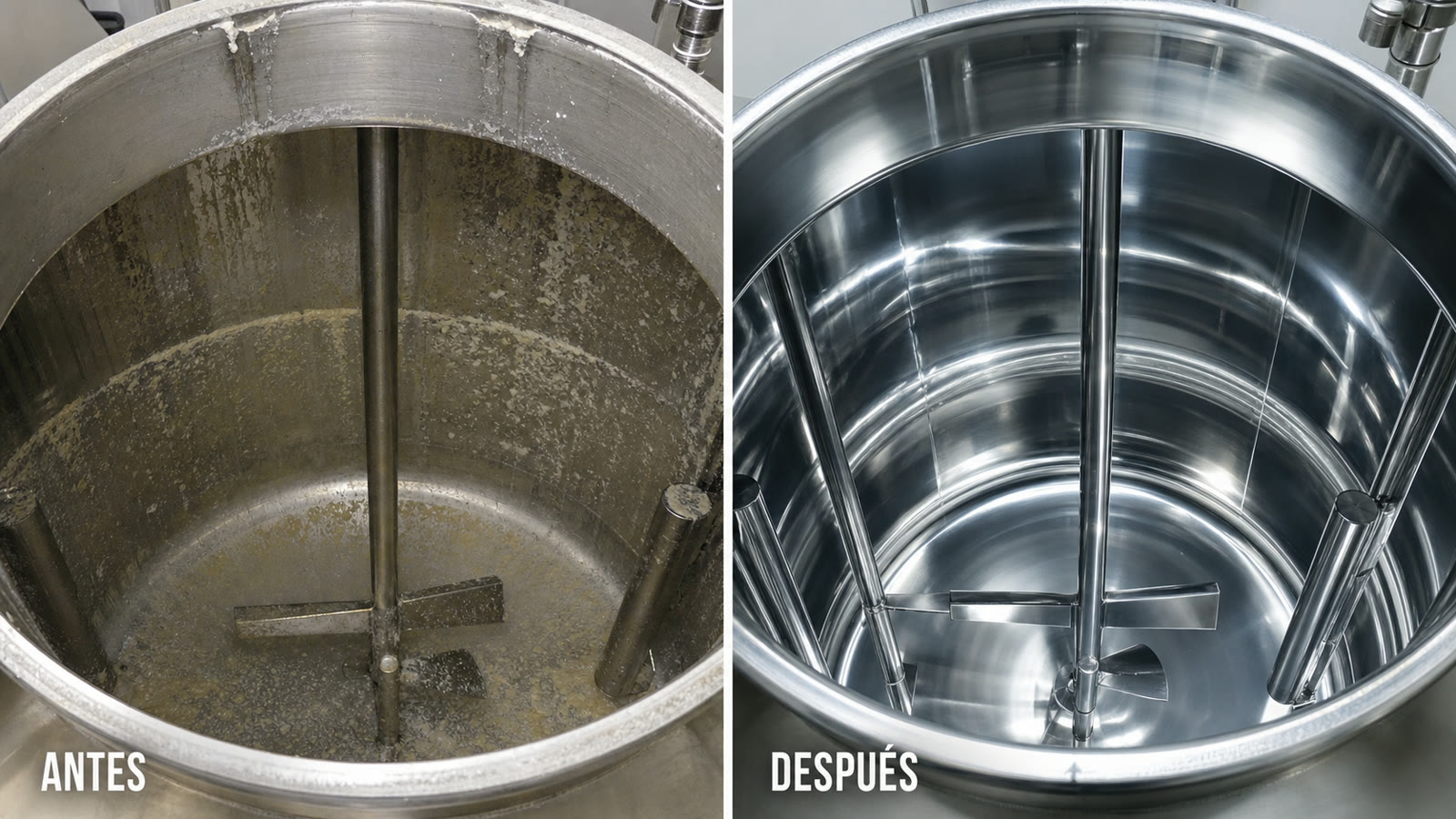
Purge can be adapted to different stages of the process, always following a technical assessment of risks and compatibility. The key is to integrate the product into a sequence that includes preliminary cleaning, controlled application, contact time, and verification. Here are some common applications that can be analyzed using EMS Cleaning:
- Meat industry: slaughterhouses, cutting rooms, workbenches, conveyor belts, equipment, and cold storage rooms where strict protocols to prevent cross-contamination are required.
- Dairy industry: tanks, CIP systems, piping, packaging rooms, and work surfaces that are constantly exposed to moisture and must meet strict hygiene standards.
- Beverages: filling machines, tanks, piping, nozzles, and bottling areas, where line availability and cycle repeatability are critical.
- Bakeries and pastry shops: trays, pans, tables, and preparation equipment, with special attention to the proper removal of grease and flour residue beforehand.
- Foodservice: central kitchens, prep tables, carts, washing areas, and shared equipment that is used frequently.
In all subsectors, a food-contact-safe disinfectant must be evaluated within its specific usage scenario. There is no universal dosage or routine that can replace validation: organic load conditions, equipment geometry, available water, and downtime all affect the outcome. A technical audit makes it possible to translate the promise of efficacy into a protocol that operators can follow.
Comparison with Conventional Disinfectants
The following comparison summarizes useful criteria for making an initial decision. Operational results always depend on the specific formulation, the conditions of use, and adherence to the manufacturer's instructions.
| Parameter | Chlorine | Quaternary ammonium compounds | Purgo |
|---|---|---|---|
| Spectrum | Spacious | Limited in Gram- | Spacious |
| Waste | THM, chloramines | Surface Waste | None |
| Stainless Steel Corrosion | Yes, sign up | Cancel | None |
| Resistors | No | Yes (documented) | No |
| Biodegradability | Midterm | Very low | >90% |
Beyond the table, the actual cost must include water consumption, the need for rinsing, PPE, maintenance, downtime, training, and incident management. A product that appears to be economical can increase the total cost if it damages assets or prolongs the process. Purgo allows you to rethink this equation from the perspectives of prevention, safety, and the efficiency of the hygiene program.
How to Incorporate Purgo into Your Hygiene Plan
The transition should begin with a technical audit of your current situation. EMS Cleaning can review areas of risk, the products in use, application methods, areas where incidents recur, and production constraints. Based on that information, we propose a realistic plan that does not compromise the plant’s continuity.
The next step involves conducting online testing and validation. It is recommended to define a pilot area, establish baseline indicators—such as microbiological results, water consumption, corrosion incidents, or cycle life—and compare performance once Purgo has been implemented. The goal is not to replace one drum with another, but to demonstrate that the new protocol controls risk more effectively.
To document changes to the HACCP plan, include product data sheets, validated instructions, records of concentration and contact time, staff training, and verification results. Also review your corrective actions: what to do in the event of a deviation, who authorizes the restart of the production line, and how the closure is documented. This ensures that food cleaning and disinfection procedures are ready for audits and for daily use.
Request a free sample and audit
If you would like to evaluate Purgo under real production conditions, request a free sample and a no-obligation technical audit. The EMS Cleaning team will help you identify the application protocol, the necessary documentation, and the areas where you can generate the most value for your plant.
Visit /quote/ or call +34 634 293 241. A controlled trial will allow you to assess whether Purgo meets your safety, productivity, sustainability, and maintenance requirements before rolling out the change to the entire facility.
Conclusion
Choosing a biodegradable disinfectant for the food industry involves evaluating much more than just antimicrobial efficacy. Your company needs a solution that helps ensure compliance with hygiene standards, minimizes waste and handling risks, protects stainless steel equipment, and provides reliable records for HACCP and certifications. Purgo by EMS Cleaning offers broad-spectrum coverage, biodegradability exceeding 90%, and a formulation designed for safer and more sustainable industrial disinfection.
The best way to assess its suitability is to evaluate it within your own framework, using technical criteria and measurable evidence. With EMS Cleaning’s support, you can transform your cleaning and disinfection program into a tool for control, efficiency, and continuous improvement.